This blog post explores the concept of point of view in literature, distinguishing it from opinion, and detailing the three main types: first person, second person, and third person (limited and omniscient). It provides examples and guidance on how to identify and analyze point of view in storytelling.
Welcome back to school! As we embark on this unique year, it's essential to believe in ourselves and have faith in our abilities to overcome challenges. Remember, perseverance, organization, and self-confidence are key to success. Today, we will delve into an important literary concept: point of view.
Point of view (POV) is often confused with opinion, but they are not the same. In literary terms, point of view refers to the narrator's perspective in a story, rather than the author's personal beliefs or themes. Understanding who the narrator is and their relationship to the story is crucial for readers.
When analyzing a story's point of view, ask yourself:
To illustrate this, imagine watching three different videotapes of a soccer game:
Each tape offers a unique viewpoint, just as different narrators provide distinct perspectives in literature.
There are three primary types of point of view in storytelling:
In first person point of view, the narrator is a character in the story, using first-person pronouns such as "I," "me," "mine," "we," and "us." This perspective allows readers to experience the narrator's thoughts and feelings directly, but it limits access to the thoughts of other characters.
Example:
"I checked into a hotel called the Olympia, which is right on the main street of town. I was hanging around and got to talking to the guy at the desk. I asked him if this wasn't the town where that kid named Joe played."
In this passage, the frequent use of "I" indicates that the narrator is sharing their personal experiences and thoughts.
In third person point of view, the narrator is not a character in the story and uses third-person pronouns such as "he," "she," "it," and "they." This perspective can be further divided into two types:
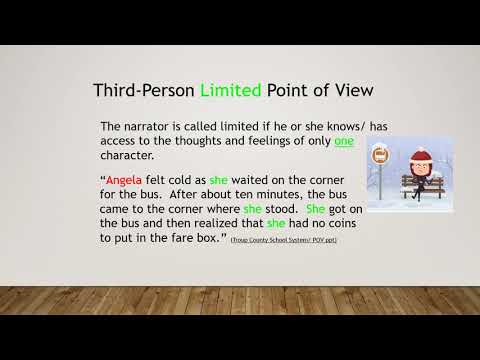
In third person limited, the narrator shares the thoughts and feelings of only one character.
Example:
"Angela felt cold as she waited on the corner for the bus. After about 10 minutes, the bus came to the corner where she stood. She got on the bus and then realized that she had no coins to put in the fare box."
Here, we only know Angela's experiences and feelings, while the thoughts of other characters remain unknown.
In third person omniscient, the narrator knows the thoughts and feelings of all characters in the story.
Example:
"Kurt was thinking about tomorrow's costume party. He had come up with an idea of what he was to wear. 'Kurt, are you going tomorrow?' asked Claire. She had a prize-winning idea that she would not tell anyone. She smiled to herself as she thought of the large box and blue tissue paper waiting at home."
This passage reveals the thoughts and feelings of both Kurt and Claire, showcasing the narrator's all-knowing perspective.
When tasked with identifying the point of view in a story, provide supporting reasons:
Understanding point of view is essential for analyzing literature effectively. By recognizing the narrator's perspective, readers can gain deeper insights into the story and its characters. As you continue your studies, practice identifying and rewriting passages from different points of view to enhance your comprehension and appreciation of literature.