This blog post explores the fundamental concepts of atomic structure, focusing on protons, neutrons, and electrons, and how their interactions explain phenomena like static electricity. Through engaging activities, students learn about atomic composition and the principles of attraction and repulsion between charged particles.
In the realm of science education, grasping the fundamental concepts of atomic structure is crucial for students. This blog post delves into the essential components of atoms—protons, neutrons, and electrons—and their roles in explaining various physical phenomena, particularly static electricity.
Atoms are the basic units of matter, and understanding their structure is foundational to many scientific principles. Each atom consists of a nucleus made up of protons and neutrons, with electrons orbiting around this nucleus. Here’s a brief overview of these particles:
The interaction between these charged particles is governed by the principle that opposite charges attract while like charges repel. This fundamental concept is key to understanding static electricity.
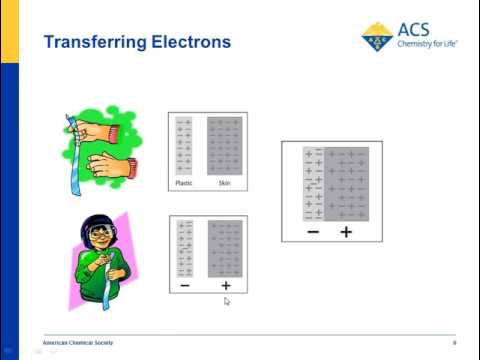
In a classroom setting, students can observe static electricity through simple experiments. For instance, when plastic grocery bag strips are rubbed, they exhibit attraction and repulsion due to static charges. This leads to the question: why does this happen at the molecular level?
To further illustrate these concepts, students can engage in hands-on activities:
These activities align with educational standards such as the NGSS performance expectation MS-PS1-1, which encourages students to develop models to describe the atomic composition of simple molecules and extended structures. By examining the atomic level, students can better understand the phenomena of static electricity.
The lesson emphasizes the connection between macroscopic phenomena, like static electricity, and the submicroscopic scale of atoms. By understanding the interactions of protons, neutrons, and electrons, students can explain observable effects in the physical world.
Lesson 4.1 serves as a foundational introduction to atomic structure and the principles of charge interactions. Through engaging activities and discussions, students gain a deeper understanding of how atoms are composed and how their interactions lead to observable phenomena like static electricity. This knowledge not only enhances their scientific literacy but also prepares them for more advanced concepts in chemistry and physics.
Thanks for exploring the fascinating world of atoms and their components!