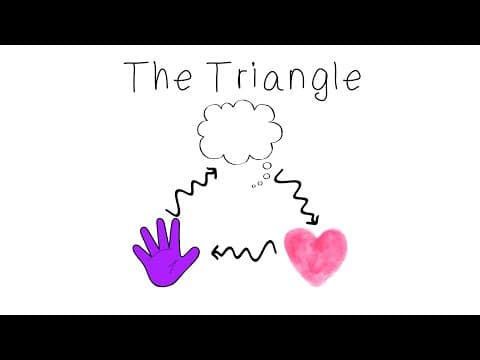
The CBT Triangle illustrates the connection between thoughts, feelings, and behaviors, emphasizing how reframing negative thoughts can lead to improved emotional well-being and actions. By practicing positive or neutral reframing, individuals can better manage their emotions and responses to challenges.
Have you ever found yourself caught in a cycle of negative thinking? Perhaps you’ve experienced a case of the "what ifs" or noticed that your mind tends to dwell on the negative when you’re feeling anxious, angry, or sad. If so, you’re not alone. Many people struggle with their thoughts, especially in challenging situations.
Our brains are constantly active, filling the silence with thoughts about our surroundings and experiences. These thoughts can significantly influence our feelings and behaviors. For instance, when you try to suppress a thought, like imagining a cute bunny, you often end up thinking about it even more. This phenomenon illustrates how difficult it can be to control our thoughts.
Let’s consider a familiar setting: the classroom. At any moment, your thoughts can range from positive to negative or even neutral. For example:
The closer our thoughts are to the extremes (positive or negative), the more intense our feelings and behaviors become. This relationship can be visualized as a triangle, often referred to as the CBT Triangle, which connects thoughts, feelings, and behaviors.
For example, if you think positively about a lesson, you are likely to feel engaged and focused, leading to productive behavior. Conversely, negative thoughts can lead to frustration and disengagement, which may hinder your ability to learn.
One of the most powerful tools we have is the ability to reframe our thoughts. This means changing our perspective on a situation to alter our emotional response and subsequent actions. Let’s explore this with a practical example:
Imagine you were looking forward to recess, but it starts to rain, ruining your plans to play soccer. Your initial thought might be, "Why does this always happen? It always rains when I want to play soccer!"
To reframe this thought, ask yourself:
If the answer is no, consider reframing your thought:
By practicing reframing, you can gain better control over your emotions and actions, transforming a negative experience into a more manageable one.
The CBT Triangle highlights the interconnectedness of our thoughts, feelings, and behaviors. By recognizing the power of our thoughts and practicing reframing, we can improve our emotional well-being and responses to challenges. The next time you find yourself overwhelmed by negative thoughts, take a moment to pause and consider how you can reframe those thoughts to foster a more positive outlook.
For educators and parents seeking more information on reframing negative thinking, resources are available at selsketches.com.
Thank you for reading, and remember to subscribe for more insights on managing thoughts and emotions effectively.