This blog post explores the three fundamental programming structures—sequences, selections, and loops—that form the basis of software development. Each structure is explained with relatable examples, illustrating how they work individually and together to create complex software solutions.
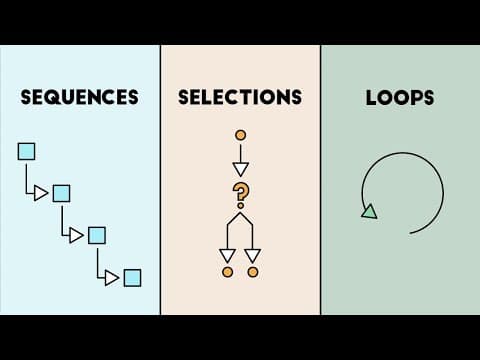
In the world of software development, behind every application we use daily lies a complex code that can often be distilled into three fundamental programming structures: sequences, selections, and loops. These structures form the backbone of basic instructions and algorithms that drive various software functionalities.
A sequence is a straightforward concept in programming. It refers to a series of actions that are executed in a specific order. Each action is performed one after the other until all actions in the sequence are completed.
Consider your morning routine as an example of a sequence. You might wake up, drink some water, take a shower, eat breakfast, and so on. Each of these actions follows a specific order, and while everyone's routine may differ, they all consist of a sequence of various actions that lead to the completion of the morning tasks.
Selections introduce a different dynamic into programming. Instead of following a predetermined order, selections involve asking questions to determine the next steps based on certain conditions.
Imagine you go to brush your teeth and discover that you are out of toothpaste. You then ask yourself, "Do I have any more toothpaste?" If the answer is no, you would add it to your shopping list. Conversely, if the answer is yes, you would simply use the toothpaste. This decision-making process is what selections are all about—answering questions based on the information available to guide the next action.
The third programming structure is the loop. Like selections, loops also involve asking questions, but they differ in that they repeatedly ask the same question until a specific task is completed.
Take the example of hammering a nail. While hammering, you continuously ask yourself, "Is the nail all the way in?" If the answer is no, you hammer the nail again. This process continues until the answer is yes, at which point you stop hammering. Loops enable programmers to efficiently handle repetitive tasks without the need to write the same code multiple times.
While sequences, selections, and loops may seem simple when considered individually, their true power emerges when they are combined. By integrating these structures, programmers can create complex software solutions that are both efficient and effective.
In conclusion, understanding these three basic programming structures is essential for anyone interested in software development. They not only simplify the coding process but also enhance the ability to create sophisticated algorithms that power the applications we rely on every day.
GCF Global is committed to creating opportunities for a better life through education and technology, and grasping these foundational concepts is a crucial step in that journey.