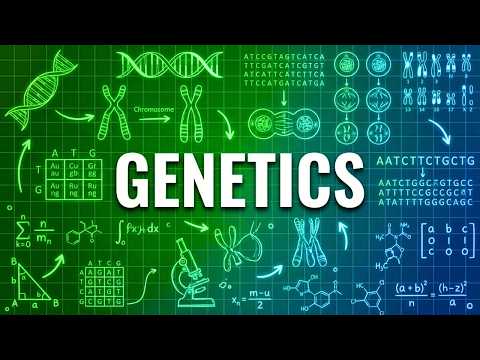
This blog post explores the principles of inheritance and variation in genetics, focusing on key concepts such as heredity, inheritance, Mendelian laws, and genetic disorders. It discusses the differences between inherited traits and acquired traits, the significance of Gregor Mendel's experiments, and the implications of genetic mutations and disorders.
Inheritance is a fundamental concept in genetics that refers to the passing of traits from parents to offspring. This process is not just limited to physical characteristics but also includes various genetic traits that can be passed down through generations. In this blog post, we will delve into the principles of inheritance and variation, exploring key concepts, Mendelian laws, and genetic disorders.
Heredity is defined as the passing of traits from one generation to the next. This can include features such as eye color, hair color, and skin tone, which are often inherited from parents or even grandparents. The study of heredity falls under the branch of science known as genetics.
While the terms heredity and inheritance are often used interchangeably, they have distinct meanings. Heredity refers specifically to genetic traits passed from one generation to another, while inheritance can also refer to properties such as wealth or property that are passed down. In biological terms, inheritance is often associated with the transfer of genes.
When discussing traits, it is essential to differentiate between inherited traits and acquired traits. Inherited traits are those passed down from parents, while acquired traits are those developed during an individual's lifetime. For example, a child may inherit their hair color from their parents but develop a skill or talent independently.
Gregor Mendel is known as the father of genetics for his pioneering work on the inheritance of traits in pea plants. He conducted experiments over seven years, meticulously counting the traits exhibited by the plants. His findings led to the formulation of the Mendelian laws of inheritance, which describe how traits are passed from one generation to the next.
Mendel's experiments involved cross-pollinating pea plants with contrasting traits, such as tall and dwarf plants. He observed that the first generation (F1) consisted entirely of tall plants, indicating that the tall trait was dominant. When the F1 generation was self-pollinated, the second generation (F2) exhibited a 3:1 ratio of tall to dwarf plants, confirming the presence of both dominant and recessive traits.
Mendel proposed several key principles based on his experiments:
Genetic mutations can lead to various disorders, which can be classified into Mendelian disorders and chromosomal disorders.
These disorders arise from mutations in a single gene and follow Mendelian inheritance patterns. Examples include:
These disorders result from abnormalities in chromosome number or structure. Examples include:
Understanding the principles of inheritance and variation is crucial for grasping the complexities of genetics. From Mendel's foundational experiments to the implications of genetic mutations and disorders, these concepts provide insight into how traits are passed down through generations and how they can affect individuals. As we continue to explore the field of genetics, the knowledge gained will enhance our understanding of heredity and its impact on health and development.