David Foster Wallace's commencement speech emphasizes the importance of awareness and choice in how we think and perceive our daily lives. He argues that true education is about learning to see beyond our default self-centered perspectives and choosing how to interpret our experiences, ultimately leading to a more meaningful existence.
In his commencement speech at Kenyon College in 2005, David Foster Wallace presents profound insights about the nature of awareness and the choices we make in our daily lives. Using the metaphor of water, he explores how the most obvious realities can often be the hardest to see and understand. This blog post delves into the key themes of his speech, emphasizing the significance of conscious thought and the choices we make about what to focus on in our lives.
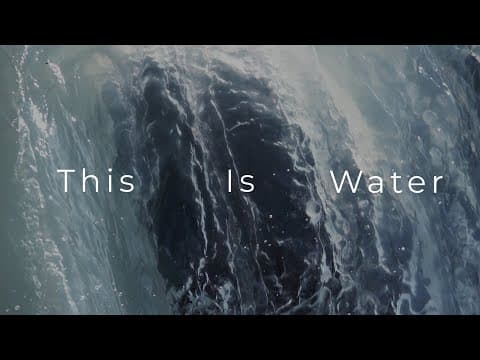
Wallace begins with a simple yet powerful story about two young fish swimming along who encounter an older fish that asks, "How's the water?" The young fish swim on, puzzled, eventually questioning, "What the hell is water?" This anecdote serves as a metaphor for the obvious realities that surround us, which we often overlook. Wallace suggests that the most important truths are frequently hidden in plain sight, and it is our responsibility to recognize them.
Wallace addresses the common assertion that a liberal arts education teaches students how to think. He challenges the notion that this is an insult, arguing instead that the real value lies in learning what to think about. He posits that the choice of what to focus on is crucial in shaping our understanding of the world. This choice is not merely about intellectual capacity but about developing a critical awareness of our own beliefs and assumptions.
Through another story about a religious man and an atheist arguing in a bar, Wallace illustrates how different belief systems can lead to vastly different interpretations of the same experience. He emphasizes that our beliefs are not hardwired but are shaped by personal choices and experiences. This realization is essential for fostering tolerance and understanding in a diverse society.
Wallace introduces the concept of our "default setting," which he describes as a natural self-centeredness that influences how we perceive the world. He argues that this self-centered perspective can lead to a sense of isolation and frustration in our daily lives. Recognizing this default setting is the first step toward making conscious choices about how we interpret our experiences.
Wallace paints a vivid picture of the mundane frustrations of adult life, such as grocery shopping after a long day at work. He illustrates how easy it is to fall into a negative mindset, viewing others as obstacles rather than fellow human beings. He urges graduates to be aware of their thoughts and to consciously choose how to respond to these everyday challenges.
The crux of Wallace's message is that we have the power to choose how we think and what we pay attention to. He argues that true education involves learning to exercise this choice, allowing us to find meaning in even the most mundane aspects of life. By shifting our perspective, we can transform our experiences from frustrating to meaningful.
Wallace concludes by emphasizing that awareness is the key to a fulfilling life. He asserts that there is no such thing as atheism in the daily trenches of life; everyone worships something. The critical question is what we choose to worship. He warns that worshiping materialism, power, or intellect can lead to emptiness and dissatisfaction. Instead, he advocates for a conscious choice to value compassion, connection, and awareness.
David Foster Wallace's commencement speech serves as a powerful reminder of the importance of awareness and choice in our lives. By recognizing our default settings and consciously choosing how to interpret our experiences, we can lead more meaningful and fulfilling lives. As Wallace poignantly states, "This is water. This is water." It is a call to remain vigilant and aware in our daily existence, reminding us that the true value of education lies not in knowledge alone but in the awareness of the world around us.