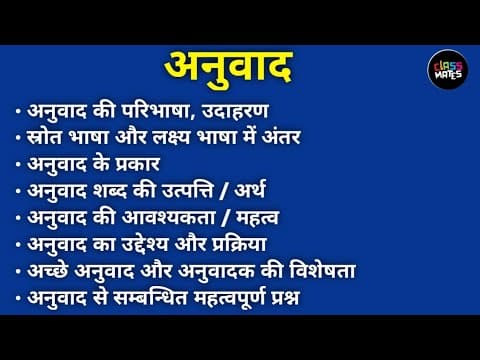
This blog post explores the concept of translation, its definitions, types, processes, and significance in bridging cultural and linguistic gaps. It highlights the role of translators and the qualities that make a good translation.
Translation is a crucial process that allows communication between speakers of different languages. In this blog post, we will discuss the meaning, definitions, forms, and characteristics of translation, as well as its significance in today's globalized world.
Translation refers to the meaningful transformation of spoken or written content from one language to another. It involves expressing the ideas conveyed in one language as accurately and naturally as possible in another language.
Prominent linguist J.C. Catford defines translation as the replacement of textual material in one language with equivalent material in another language, ensuring that the same effect is achieved on the target audience as was intended for the original audience. Eugene Nida describes translation as the closest natural equivalent of the source language message in terms of meaning and style in the target language.
The term "translation" is derived from the Sanskrit word "अनुवाद" (Anuvad), which combines the prefix "अनु" (Anu) meaning "after" or "following" and the root word "वाद" (Vad) meaning "to say" or "to speak." Thus, the literal meaning of translation is to speak after someone else. In modern usage, it is synonymous with the English word "translation," which comes from the Latin words "trans" (across) and "latio" (carrying).
In the translation process, two key components are the source language and the target language. The source language is the language from which the content is translated, while the target language is the language into which the content is translated. For example, if a sentence in Hindi is translated into English, Hindi is the source language and English is the target language.
Translation can be categorized into three main types:
Word-for-word Translation (शब्दावाचुन): This type involves a direct translation of words from the source to the target language without considering the emotional context. It is also known as literal translation.
Sense-for-sense Translation (भावा वाद): This approach takes into account the cultural context and emotions of both languages, focusing on conveying the original meaning while adapting to the target language's structure.
Free Translation (पर्याय या रूपांतर): In this method, the translator has more freedom to modify the text, incorporating their own ideas while maintaining the original intent and energy of the source material.
With the reduction of distances between countries in the 20th century, the exchange of ideas and knowledge across linguistic boundaries has increased significantly. Translation has become essential in the scientific era, enabling us to understand advancements in various fields, including science, culture, and social issues.
The primary objectives of translation include:
When translating, several factors must be considered:
A good translation should possess the following qualities:
A translator is responsible for converting content from the source language to the target language. A good translator must have a strong command of both languages, understanding their structures, idioms, and cultural contexts. Simply replacing words from one language to another is not sufficient; a translator must grasp the meaning and intent behind the text.
The essential qualities of a good translator include:
Translation serves as a cultural bridge, allowing us to connect with diverse literatures and societies. It is an art that requires not only linguistic skills but also cultural sensitivity and creativity. Understanding translation is essential for appreciating the richness of global literature and fostering cross-cultural communication.
Translation is not just a technical skill; it is a vital tool for understanding and connecting with the world around us.