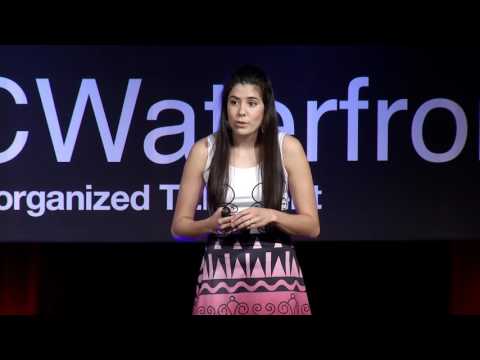
Rebecca Thomas discusses the concept of Two-Eyed Seeing, emphasizing the importance of indigenous languages and perspectives in understanding the world. She highlights how language shapes identity and worldview, and advocates for a collaborative approach that respects both indigenous and non-indigenous ways of knowing.
Language is a powerful tool that shapes our worldview and influences how we interact with the world around us. This is particularly true for indigenous languages, which are deeply woven into the identity and culture of indigenous peoples. In her TEDx talk, Rebecca Thomas introduces the concept of Two-Eyed Seeing, a framework that encourages the integration of both indigenous and Western perspectives to foster understanding and collaboration.
Rebecca begins by discussing a study published in Psychological Science that illustrates how different languages can shape thought processes. The study compared English and German speakers, revealing that English speakers focus on actions, while German speakers provide context by including destinations. This difference highlights how language can influence perception and understanding.
Indigenous languages often carry meanings that are lost in translation. For instance, the Mi'kmaq word for welcome translates more accurately to "I'll do my best," reflecting a deeper, more nuanced interaction. This illustrates that language is not merely a means of communication but is integral to identity and culture.
Rebecca introduces the term "peoplehood," coined by Robert Thomas, which encompasses not just individual identity but also the connection to a larger community. Peoplehood consists of four interconnected elements:
These elements are interdependent, much like a spiderweb; if one thread is cut, the entire structure is compromised. This interconnectedness emphasizes the importance of understanding indigenous identity as a holistic concept.
Rebecca reflects on the historical context of indigenous peoples, noting that much of their language and culture has been lost due to colonialism. The imposition of English and French languages has altered the way indigenous peoples communicate and express their identities. However, she asserts that this does not diminish their status as indigenous individuals.
The concept of Two-Eyed Seeing, introduced by Elder Albert Marshall, advocates for viewing the world through both indigenous and Western lenses. This approach recognizes the strengths of both perspectives and encourages mutual understanding and collaboration. Two-Eyed Seeing is particularly relevant in educational contexts, where it can enhance learning for all students, not just indigenous ones.
Rebecca emphasizes that implementing indigenous pedagogical methods benefits everyone. These methods are often more inclusive and recognize diverse ways of knowing, which can lead to improved educational outcomes across the board.
According to Albert Marshall, the foundation of any relationship is an exchange of stories. Rebecca, as a storyteller and poet, uses her art to convey the complexities of indigenous identity and the importance of understanding different worldviews. She shares a powerful poem that encapsulates the essence of Two-Eyed Seeing, highlighting the need for recognition and respect for indigenous perspectives.
Rebecca Thomas's talk on Two-Eyed Seeing serves as a call to action for individuals and institutions to embrace a more inclusive approach to understanding and collaboration. By recognizing the value of indigenous languages and perspectives, we can foster a more meaningful dialogue that respects the rich cultural heritage of indigenous peoples. The journey towards mutual understanding requires effort, openness, and a willingness to see the world through multiple lenses.