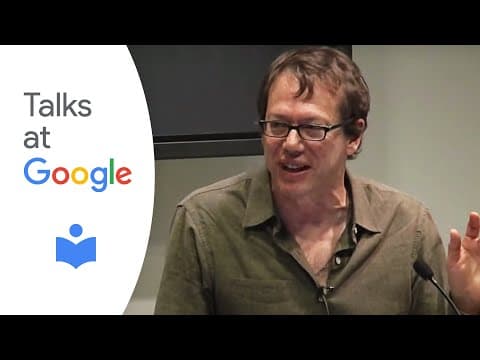
Robert Greene's talk on creativity emphasizes that true creativity stems from a combination of deep knowledge, fluid thinking, and the ability to explore beyond conventional boundaries. He outlines practical strategies to enhance creative potential, including cultivating negative capability, thinking like an outsider, using active imagination, and subverting habitual thought patterns.
In a recent talk at Google, renowned author Robert Greene discussed the themes of his new book, "Mastery," focusing particularly on the nature of creativity. Greene's insights delve into what it means to be truly creative and how individuals can cultivate their creative potential.
Greene begins by addressing a common scenario faced by many: the feeling of inadequacy after completing a project. Despite our best efforts, we often sense that something is missing, that we could have explored more options. This feeling raises the question: what differentiates highly creative individuals from the rest of us? Is it genetics, luck, or upbringing? Greene argues that true creativity is not a rare gift but a process that can be cultivated.
According to Greene, the journey to creativity begins with choosing a field that resonates with one's deepest interests. This intrinsic motivation drives individuals to engage more deeply, learn faster, and persist longer than others. After selecting the right path, the next step is undergoing an effective apprenticeship, where one absorbs the rules and skills of the field.
At a certain point in this apprenticeship, individuals face a crossroads: they can either become prisoners of their knowledge, sticking to conventional paths (A, B, C), or they can awaken their creative energy by exploring beyond these limits. Greene emphasizes that masters in any field are those who choose the latter path, ultimately internalizing their knowledge and gaining a comprehensive understanding of their subject.
Greene asserts that the human brain is inherently creative, designed to make connections and envision possibilities beyond the obvious. He encourages individuals to recognize that creativity is not limited to a select few but is a natural capacity that can be awakened and harnessed. However, many self-imposed barriers inhibit this creative flow.
To help individuals unlock their creative potential, Greene outlines several strategies that highly creative people employ:
Cultivate Negative Capability
This concept, introduced by poet John Keats, refers to the ability to remain comfortable with uncertainty and ambiguity. Creative individuals do not rush to conclusions; instead, they embrace the unknown, allowing for a broader exploration of ideas. Greene illustrates this with examples from both art and science, highlighting how figures like Mozart and Einstein thrived by maintaining a state of negative capability.
Think Like an Outsider
Many groundbreaking innovations come from individuals who approach problems from outside their field. Greene cites Louis Pasteur and Albert Einstein as examples of outsiders who brought fresh perspectives to their work. By leveraging knowledge from unrelated fields, individuals can ask different questions and make unique connections, fostering creativity.
Use Active Imagination
Greene emphasizes the importance of actively engaging the imagination to generate possibilities. This involves brainstorming freely and then refining those ideas into practical solutions. He encourages a cyclical process of imagination and verification, allowing for continuous improvement and innovation.
Subvert Your Patterns of Thinking
Our minds often fall into habitual patterns that limit creativity. Greene suggests actively challenging these patterns by focusing on process rather than just outcomes. By examining anomalies and what is absent in a situation, individuals can uncover new insights and creative solutions.
In conclusion, Greene encapsulates his message by urging individuals to integrate the playful, exploratory spirit of childhood with the disciplined, experienced mindset of adulthood. This synthesis fosters a creative individual capable of navigating both the imaginative and practical aspects of their work.
Greene's talk serves as a powerful reminder that creativity is not an elusive trait but a skill that can be developed through intentional practice and a willingness to explore beyond conventional boundaries. By adopting these strategies, anyone can unlock their creative potential and contribute to innovative solutions in their respective fields.