A comprehensive analysis of the genetic study on the migrations to the Philippines reveals five distinct waves of migration over 50,000 years, challenging traditional theories and highlighting the complex ancestry of the Filipino people.
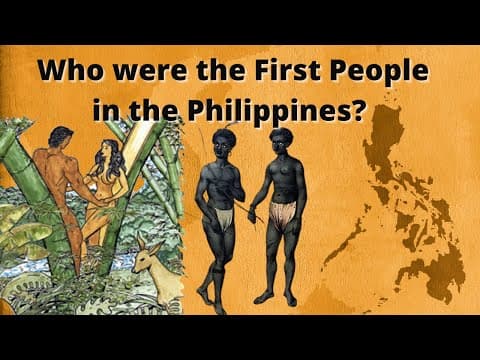
According to a Filipino legend, the first people were Malakaz and Maganda, who emerged from bamboo trees and were flown to the green islands on the back of a bird. This mythological narrative raises the question: who were the first Filipinos? In this blog post, we will explore the findings of a recent genetic study that sheds light on the complex history of human migration to the Philippines.
In the Philippines, the wave migration theory has been a staple in educational curricula. This theory posits that the archipelago was colonized by three waves of people:
This theory was proposed by H. Otley Beyer, the founder of the anthropology department at the University of the Philippines, in the early 1900s. However, most modern experts consider this theory outdated, favoring more recent studies that provide a nuanced understanding of migration patterns.
A significant study published in 2021 analyzed the genetics of various groups in the Philippines and concluded that there were five waves of migration into the country over the last 50,000 years. To understand this study, we must trace back to around 70,000 years ago in East Africa, when humans began to migrate out of Africa.
Around 50,000 years ago, some of the earliest migrants to the Philippines were the Negritos, who are characterized by their darker skin. These groups likely traveled through interconnected islands during a time when sea levels were lower due to the Ice Age. The study suggests two possible migration routes:
These Negritos are considered the first Filipinos, with those in Luzon referred to as the Northern Negritos and those in Mindanao as the Southern Negritos.
Around 15,000 years ago, another group known as the Basal East Asians migrated into Southeast Asia. As the Ice Age ended around 12,000 years ago, rising sea levels forced many groups to seek higher ground or new islands. One such group, the Ancestral Manobo, migrated to Mindanao and is considered the third wave of migration.
Simultaneously, other Basal East Asians spread throughout East Asia. Some migrated to the southwest of the Philippines, leading to the emergence of the Sama people, known for their exceptional sailing skills and oceanic lifestyle. They represent the fourth wave of migration.
The Ancestral Cordillerans, who arrived from southern China around 12,000 years ago, constitute the fifth wave of migration. Their migration occurred in pulses over several millennia, likely triggered by climate change and the submergence of land bridges.
The arrival of the Austronesians, often referred to as the Ancestral Cordillerans, led to significant cultural and linguistic changes in the Philippines. The Austronesian language became the dominant influence across the archipelago, with all Filipino languages classified under the Malayo-Polynesian branch of the Austronesian language family. Interestingly, evidence suggests that agriculture did not arrive in the Philippines until around 2,500 years ago, indicating that these early migrants were primarily hunter-gatherers.
It is crucial to note that these groups did not live in isolation. Many interacted, cohabited, and intermarried, leading to a diverse genetic and cultural landscape in the Philippines. Most Filipinos today are not purely descended from one group but are a blend of various ancestries.
The genetic study of the migrations to the Philippines reveals a complex tapestry of human history, with five distinct waves of migration shaping the Filipino identity. Climate change played a significant role in these migrations, demonstrating the profound impact of environmental factors on human movement. While this study provides valuable insights, it is essential to recognize that the story of the Philippines is far from complete, as migration and cultural exchange continue to evolve.
As we delve deeper into the history of the Philippines, we uncover not only the origins of its people but also the rich cultural heritage that defines the nation today.