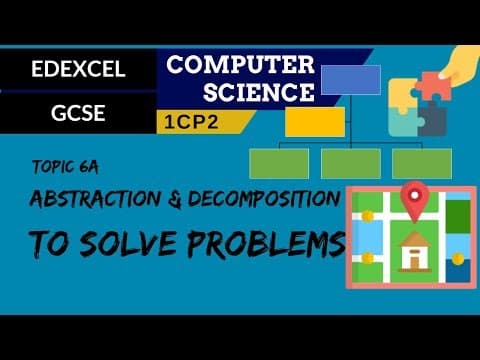
This blog post explores the concepts of abstraction and decomposition in problem-solving, particularly in programming. It provides a detailed example of calculating wages using Python, illustrating how to break down complex problems into manageable parts and focus on relevant details for effective coding.
In this blog post, we will explore how to effectively use the skills of abstraction and decomposition to solve programming problems, particularly in the context of writing Python code. These concepts are essential for breaking down complex problems into manageable parts and focusing on what is important in problem-solving.
Abstraction is the process of removing unnecessary details and focusing on the relevant aspects of a problem. It is a method of computational thinking that helps programmers identify what is important in their solutions. When faced with a problem, it is crucial to ask:
Decomposition involves breaking down a complex problem into smaller, more manageable parts. Tackling multiple stages of a problem at once can be overwhelming, so it is beneficial to divide the problem into smaller sub-problems and solve each one individually.
To illustrate these concepts, let’s consider a practical example where we need to write a program that calculates a person's wage and outputs a wage slip. The program should:
To begin, we will apply abstraction to identify the key requirements of our program. Here are the essential components we need to include:
By focusing on these requirements, we can avoid adding unnecessary details that do not contribute to the solution.
Next, we will use decomposition to break down the problem into smaller tasks. We can visualize the structure of our program as follows:
This structured approach allows us to tackle each part of the program independently, making the coding process more manageable.
Now that we have our abstraction and decomposition laid out, we can start implementing the program in Python.
We begin by gathering input from the user regarding hours worked and hourly rate:
hours = float(input("Enter the number of hours worked: "))
rate = float(input("Enter your hourly rate of pay: "))
Next, we will create a function to calculate gross pay. This function will take the hours worked and the hourly rate as parameters:
def calculate_gross_pay(hours, rate):
    if hours <= 37:
        gross_pay = hours * rate
    else:
        overtime_hours = hours - 37
        gross_pay = (37 * rate) + (overtime_hours * rate * 1.5)
    return gross_pay
We will also need to calculate the deductions for income tax and National Insurance:
def calculate_deductions(gross_pay):
    income_tax = gross_pay * 0.20
    national_insurance = gross_pay * 0.08
    total_deductions = income_tax + national_insurance
    return total_deductions
Now, we can calculate the net pay by subtracting the total deductions from the gross pay:
net_pay = gross_pay - total_deductions
Finally, we will output the wage slip to the screen:
print(f"Wage Slip:\nGross Pay: {gross_pay}\nDeductions: {total_deductions}\nNet Pay: {net_pay}")
By applying the principles of abstraction and decomposition, we can effectively tackle complex programming problems. This structured approach not only simplifies the coding process but also enhances clarity and efficiency in problem-solving. As demonstrated in our wage calculation example, breaking down the problem into manageable parts allows for a more organized and systematic coding experience. With practice, these skills will become invaluable tools in your programming toolkit.