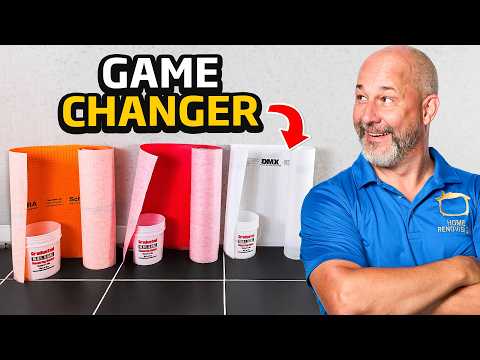
This blog post compares three tile membranes: Schlüter-Ditra, Prova, and DMX, highlighting their installation processes, performance, and cost-effectiveness. DMX emerges as the preferred choice due to its ease of installation, structural integrity, and affordability.
In the world of flooring, choosing the right tile membrane can significantly impact the installation process and the longevity of your flooring. In this post, we will compare three different types of tile membranes: Schlüter-Ditra, Prova, and the newly introduced DMX tile membrane. With over 30 years of experience in tile installation, I will share insights on why I believe DMX is the best option for your next project.
Tile membranes serve as a protective layer between the subfloor and the tile, helping to prevent issues such as cracking and moisture damage. Traditionally, homeowners have opted for floating floors or vinyl, but the gold standard remains hardwood and porcelain tiles. When installing porcelain tiles on plywood with thin set, height discrepancies can arise, leading to potential tripping hazards and aesthetic issues.
The Schlüter company revolutionized the industry in 1985 with the introduction of the Ditra uncoupling membrane. This product features a fleece backing that adheres to the subfloor while allowing the tile to move independently, thus preventing cracks. The installation of this membrane is designed to maintain a consistent height with hardwood floors, providing a seamless transition.
Schlüter-Ditra has long been considered the gold standard in tile membranes. Its design allows for excellent compression resistance, making it suitable for high-traffic areas, including commercial spaces. However, recent changes to the product have raised concerns. The introduction of grooves between the squares may allow for expansion and contraction, potentially leading to cracks in the tile surface. Despite its historical reliability, these changes could compromise its performance.
Prova offers a more affordable alternative with a diamond-shaped design. While it has gained popularity among contractors due to its price point, it lacks extensive testing to confirm its effectiveness. Many contractors report satisfactory results without tile failures, but the design does not significantly innovate beyond Schlüter-Ditra.
The DMX tile membrane stands out for its unique dimpled design, which enhances load distribution. Each step taken on the membrane distributes weight evenly, reducing the risk of failure. The installation process is straightforward and efficient, allowing for faster completion times. DMX has also conducted rigorous testing, including the Robinson test, to validate its performance, making the data available for transparency.
Before installing any membrane, it is crucial to prepare the subfloor properly. This involves dampening the plywood to prevent the thin set from drying too quickly, which can lead to poor adhesion. The ideal consistency for the thin set should allow for good bonding without glazing over.
The installation process for each membrane involves rolling it out and cutting it to size. However, achieving proper adhesion is critical. For Schlüter-Ditra, using a roller can help embed the membrane into the thin set, but this tool can be costly for homeowners. In contrast, DMX's design allows for easier installation with less effort required to achieve a strong bond.
During the installation, it is essential to check for adequate adhesion. Areas where the thin set does not make full contact can lead to deflection and potential failure. DMX's dimpled design minimizes these issues, allowing for a more straightforward installation process with fewer passes required to achieve full coverage.
While Schlüter-Ditra has been the industry leader, its cost can be prohibitive. Prova offers a more budget-friendly option, but DMX is even more affordable, being 35% cheaper than Schlüter and competitively priced against Prova. Additionally, DMX includes a roll of joint seam tape with each purchase, enhancing the installation's integrity by ensuring that adjacent plywood sheets do not move independently.
In summary, while Schlüter-Ditra has been a reliable choice for decades, recent changes raise concerns about its performance. Prova provides a cost-effective alternative, but DMX emerges as the best option due to its ease of installation, structural integrity, and affordability. For homeowners and contractors alike, choosing DMX can lead to faster, easier, and more reliable tile installations. If you have any questions about your specific project or need further guidance, feel free to reach out for assistance.