This blog post provides a comprehensive guide on how to effectively repair cracked and spalled concrete, including steps for surface preparation, rust removal, and application of bonding agents and high-strength mortar.
Concrete damage, such as cracks and spalling, can be a common issue in homes and buildings. This blog post outlines practical and effective methods for repairing these problems, ensuring the longevity and durability of concrete structures.
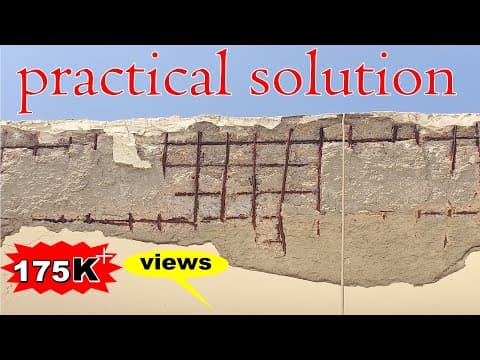
Concrete spalling occurs when rust develops on embedded steel bars (rebar) within the concrete. This rusting leads to expansion, causing cracks and, in severe cases, pieces of concrete to break away. This phenomenon is often referred to as oxide jacking or rust bursting. The expansion of rust can increase the volume of the rebar significantly, sometimes up to eight times its original size, which exerts pressure on the surrounding concrete, weakening its flexural strength.
The first step in the repair process is to remove any loose concrete around the cracks. Use a chisel and hammer to chip away the damaged areas. Check the surrounding concrete by tapping it; if you hear a hollow sound, it indicates loose material that should also be removed. Ensure that all loose concrete is cleared before proceeding to the next step.
After removing the loose concrete, clean the area thoroughly to eliminate any debris or dust that could hinder the bonding of new concrete. An air blower can be used for this purpose, or alternatively, a painting brush can be employed to ensure a clean surface.
Removing rust from the exposed rebar is crucial for a successful repair. Use a wire brush to scrub the rebar, as the fine wires effectively remove rust. After brushing, apply a rust remover chemical to the rebar and allow it to sit for about half an hour. Follow this by scrubbing the rebar again with the wire brush and rinsing it with clean water to remove any residual acid. If any rebar is severely corroded, it should be replaced with new rebar, secured with a re-wiring chemical.
To protect the exposed rebar from future rusting, apply a zinc coating, which acts as a barrier against moisture and air. This coating is essential as it prevents the conditions that lead to rust formation.
Before applying new concrete, a bonding agent should be applied to ensure a strong connection between the old and new materials. This agent should be applied just before the repair work begins, as it needs to be tacky for effective bonding.
For the repair, avoid using traditional hand-mixed mortar. Instead, opt for a high-strength fiber-reinforced polymer mortar from a trusted brand, which should have a compressive strength of at least 40 Newtons per square millimeter after 28 days. These products are often available in pre-mixed dry form, requiring only the addition of water. Polymer-modified mortars provide better results than traditional mortars, as they resist cracking and water infiltration.
After completing the repair, it is essential to cure the area for the next three days. This involves keeping the repaired section moist at least twice a day to ensure proper hydration and strength development.
Repairing cracked and spalled concrete is a manageable task when approached methodically. By following these steps, you can restore the integrity of your concrete structures and prevent further damage. If you found this guide helpful, consider sharing it to help others facing similar issues. Remember to subscribe for more informative content on home repairs and maintenance.