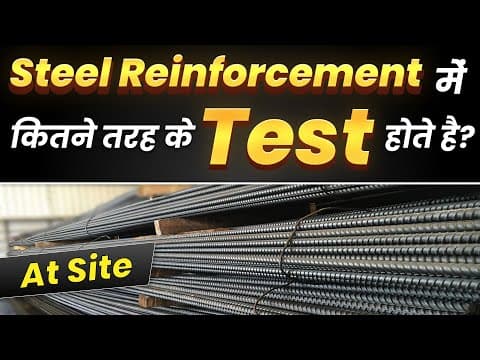
This blog post explores various methods for quality testing of steel reinforcement, including manufacturing test certificates, tagging, measurement of length and diameter, weight checks, color tests, and bend and ribbon tests, ensuring that the steel used in construction meets required standards.
Steel reinforcement is a critical component in construction, ensuring the strength and durability of structures. To guarantee that the steel used is of high quality, various tests can be conducted on-site. This blog post will delve into the different types of tests that can be performed to assess the quality of steel reinforcement.
Quality testing of steel reinforcement is essential to ensure that the material meets the required standards for construction. Poor quality steel can lead to structural failures, which can have severe consequences. Therefore, it is crucial to perform thorough checks before using steel in any construction project.
When steel bars arrive on-site, the first step is to check the manufacturing test certificate. This certificate confirms that the steel bars produced meet specific standards. It includes details about the components used in the manufacturing process and assures that the bars are suitable for use. Always request this certificate from the vendor supplying the steel.
Steel reinforcement bars often come with tags that indicate their manufacturer and specifications. For example, if you are using Tata Steel, the tag will clearly state that it is from Tata Steel. Additionally, the tag should include the grade of the steel, such as 500D. If the tag is missing or incorrect, the steel may not be reliable for construction.
Another critical test is measuring the length of the steel bars. If you ordered a 12-meter bar, use a measuring tape to confirm that it is indeed 12 meters long. If the bar measures less than the specified length, it indicates a manufacturing defect, and the steel should not be used.
The diameter of the steel bars must also be verified. For instance, if you ordered a 16 mm diameter bar, use appropriate gauges to check that the diameter matches the specification. Any discrepancies could indicate poor quality or manufacturing issues.
Each type of steel bar has a specific weight per unit length. For example, a 12 mm bar should weigh approximately 0.88 kg per meter. You can calculate the expected weight using the formula:
Weight = Diameter² / 162
If the weight does not match the expected value, it suggests that the bar may be defective.
New steel bars typically have a gray color. If the bars start to turn brown, it may indicate rusting, which is a sign of deterioration. If rust transfers to your hands when you touch the bar, it is a clear indication that the steel is not suitable for use.
The bend test is crucial for assessing the ductility of the steel. To perform this test, take a bar and bend it 180 degrees. If cracks develop on the outer surface during this process, the bar is considered defective.
In the ribbon test, the bar is bent at a 135-degree angle and held in that position for 30 minutes. After this period, it is bent again to 157.5 degrees. If cracks appear during this second bending, the bar is deemed unsuitable for construction.
Quality testing of steel reinforcement is vital to ensure the safety and integrity of construction projects. By performing these tests, you can identify any manufacturing defects and ensure that the steel used meets the necessary standards. Always remember to check the manufacturing test certificate, tags, measurements, weight, color, and conduct bend and ribbon tests to verify the quality of steel reinforcement.
By following these guidelines, you can confidently assess the quality of steel reinforcement on-site, ensuring that your construction projects are built on a solid foundation.