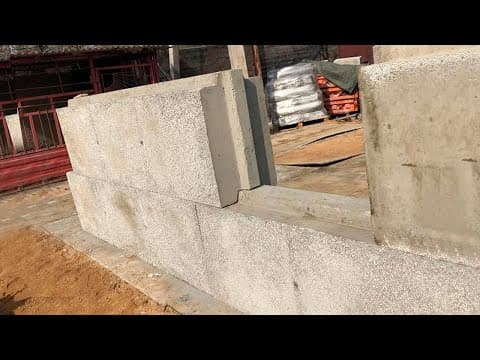
This article delves into polystyrene concrete, a modern building material, discussing its composition, advantages, disadvantages, and comparisons with traditional materials like gas concrete and brick. It highlights the ease of production, structural properties, and cost variations, while also addressing potential issues such as deformation and fire resistance.
Building a house involves making crucial decisions about materials. Among the options available, polystyrene concrete has emerged as a modern alternative. This article explores what polystyrene concrete is, its advantages and disadvantages, and how it compares to traditional building materials.
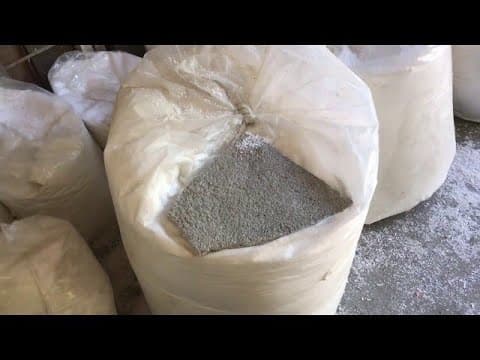
Polystyrene concrete is a type of concrete that incorporates polystyrene beads into its mix. This unique composition allows for a lightweight and versatile building material. The production process is relatively simple: polystyrene beads are mixed with cement, poured into molds, and allowed to set. This method requires minimal equipment and can be established quickly, making it an attractive option for builders.
The production of polystyrene concrete is straightforward and can be set up in a matter of months. Unlike autoclaved aerated concrete, which requires extensive time and resources to establish a factory, polystyrene concrete can be produced with basic equipment and a small workforce.
Polystyrene concrete exhibits high elasticity and deformability. This means it can withstand various loads without cracking, unlike more brittle materials such as gas concrete. For instance, if a gas concrete block is dropped, it is likely to shatter, while a polystyrene concrete block may simply bend without breaking.
Polystyrene concrete blocks provide good thermal resistance, allowing for the construction of single-layer walls. This can lead to energy-efficient homes if the right density and thickness are chosen.
The cost of polystyrene concrete blocks varies significantly, ranging from 4,500 to 8,500 rubles per cubic meter in the Moscow region. This price range is competitive compared to gas concrete, which typically costs between 3,500 and 5,500 rubles per cubic meter.
One of the most appealing aspects of polystyrene concrete is that it can be produced by individuals at home. This flexibility allows for custom projects and can reduce overall construction costs.
Despite its advantages, polystyrene concrete is prone to deformation under heavy loads. This can lead to structural issues, especially if the walls are not thick enough to support the weight of the roof or upper floors.
Polystyrene concrete has a higher shrinkage rate compared to gas concrete, which can lead to cracks and other structural problems over time. This is a critical factor to consider during construction and finishing work.
While manufacturers claim that polystyrene concrete is non-combustible, the presence of organic materials in the polystyrene beads means that it can still participate in combustion under certain conditions. Therefore, it is essential to apply a thick layer of plaster to ensure fire safety, which can increase overall costs.
There is a significant lack of standardized testing and documentation for polystyrene concrete. Builders often have to conduct their own tests to determine the material's properties, which can be time-consuming and costly.
Polystyrene concrete presents a modern alternative for building homes, offering several advantages such as ease of production, good thermal resistance, and cost-effectiveness. However, potential drawbacks like deformation under load, shrinkage, and fire resistance must be carefully considered. While many self-builders report satisfaction with polystyrene concrete, it is less commonly used by professional builders due to the challenges associated with its properties and testing.
Ultimately, the decision to use polystyrene concrete should be based on individual project requirements and thorough research. As with any building material, understanding both the pros and cons is essential for making an informed choice for your dream home.