This blog post provides a detailed overview of the process of pouring concrete footings using a boom pump, including preparation, inspection requirements, equipment setup, and the pouring process itself.
Pouring concrete footings is a critical step in construction, ensuring a solid foundation for any structure. In this guide, we will walk through the entire process, from preparation to the final pour, using a boom pump for efficiency and precision.
Before the concrete can be poured, several preparations must be made to ensure everything is in place and ready for inspection. Here are the key steps:
The forms must be built and secured properly. It is essential to check that all bolts are in place, especially those that hold structural elements like the bedding walls. For instance, bolts may have arrows indicating their correct placement, which is crucial for structural integrity.
Reinforcement bars (rebar) are vital for the strength of the concrete. In this case, a rebar is used for the electrical panel grounding, which should be a minimum of 18 inches from the bottom of the outside of the house. It is also important to ensure that the rebar does not touch the ground to prevent corrosion.
All trenches must be clean and free from roots and exposed dirt. Compaction is necessary to ensure stability, and it is advisable to wet the perimeter of the trenches to aid in compaction. The depth of the piers should be at least 18 inches, with dimensions of 24 by 24 inches.
Before pouring concrete, it is crucial to have all materials on-site for inspection. This includes:
Having everything organized and accessible will facilitate a smooth inspection process.
For this project, a 32-meter boom pump was ordered to efficiently pour concrete into the foundation forms. Here’s how the setup works:
The first step is to find a level area for the boom pump. Outriggers must be deployed to stabilize the pump, as it carries significant weight. Using outrigger pads helps distribute the weight evenly, preventing sinking into the ground.
The boom pump is operated using a remote control, allowing the operator to maneuver the boom within a 32-meter radius. The pump can be adjusted for speed and volume, ensuring that the concrete is delivered at the right consistency and pace.
Once the setup is complete and the mixer truck arrives, the pouring process begins:
For this project, five trucks of concrete were ordered, each delivering nine yards. It is essential to follow the engineer's specifications regarding the concrete blend, as different projects may require different types of concrete.
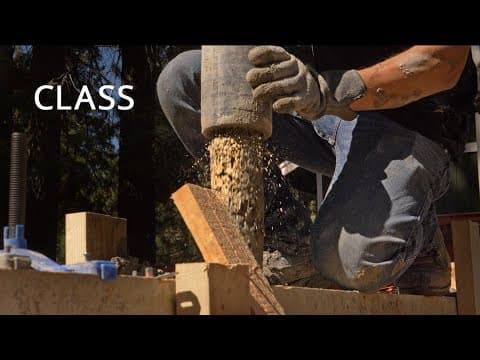
As the concrete is poured, adjustments to the rebar are made, and a concrete vibrator is used to ensure that the concrete settles properly and consolidates without air pockets. This step is crucial for achieving a strong and durable footing.
After filling the forms, the surface of the concrete is smoothed out. Once the concrete has cured, the forms can be removed, allowing the construction to progress to the next phase.
Pouring concrete footings is a detailed process that requires careful preparation, proper equipment, and adherence to specifications. By following these steps and utilizing a boom pump, contractors can ensure a solid foundation for any construction project. Thank you for following along, and we hope to see you next time for more insights into construction techniques.