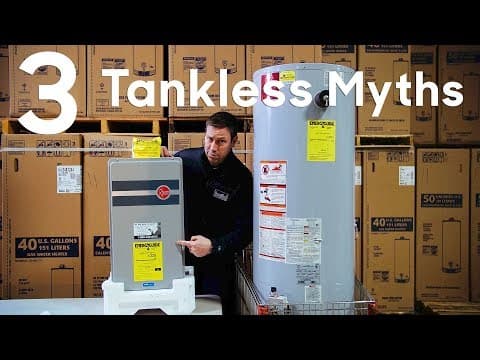
This article explores three common myths about tankless water heaters, including misconceptions about savings, instant hot water, and maintenance. It also highlights three compelling reasons to consider switching to a tankless system, such as performance, space efficiency, and longevity.
Are you considering upgrading your water heater from a traditional tank model to a tankless one? In this article, we will address three prevalent misconceptions about tankless water heaters and provide three compelling reasons to consider making the switch.
Many people believe that switching to a tankless water heater will lead to substantial savings on energy bills. While it is true that tankless models can be more efficient, the actual savings may not be as significant as advertised.
For instance, a typical tankless water heater may cost around $225 in propane annually for an average family, which breaks down to approximately $19 per month. In contrast, an older traditional tank model might incur costs of about $315 per year, or roughly $26 per month. This results in a difference of about $7 to $8 per month in savings. While this is a reduction, it may not be enough to justify the initial investment in a tankless system for everyone.
Another common misconception is that tankless water heaters deliver instant hot water. While these units heat water on demand, you still need to wait for the hot water to travel through the pipes to your faucet. If the water has been sitting in the pipes, it will be cold when you first turn on the tap.
To achieve truly instant hot water at your sink, a circulation pump is necessary. This device circulates hot water through the plumbing system, ensuring that hot water is readily available when you turn on the faucet. Without this additional equipment, you will still experience a wait time for hot water.
Many believe that tankless water heaters require no maintenance, but this is not entirely accurate. While they may require less frequent maintenance than traditional tanks, tankless systems still need regular flushing to prevent mineral buildup, especially in areas with hard water.
Depending on usage, a tankless water heater may need to be flushed annually or biannually. This maintenance can cost around $150 if performed by a plumber. Therefore, it is essential to factor in these maintenance costs when considering the overall savings of a tankless system.
Despite the myths, there are several compelling reasons to consider switching to a tankless water heater:
One of the most significant advantages of tankless water heaters is their ability to provide nearly limitless hot water. Unlike traditional tanks, which can run out of hot water during high-demand situations, tankless systems heat water on demand. This means that you can enjoy long showers or multiple hot water uses simultaneously without the fear of running out.
Tankless water heaters are much smaller than traditional tanks, making them ideal for homes with limited space. They can be mounted on walls or even installed outside, eliminating the need for extensive venting requirements. This space-saving design allows for more flexibility in home layouts and renovations.
Tankless water heaters generally have a longer lifespan compared to traditional models. While standard tanks typically last around 10 to 15 years, a well-maintained tankless unit can last 20 to 25 years. This longevity can make the initial investment more worthwhile over time, as you may not need to replace the unit as frequently.
In summary, while tankless water heaters come with their own set of myths and misconceptions, they also offer significant benefits that can enhance your home's hot water supply. By understanding the realities of tankless systems, you can make a more informed decision about whether they are the right choice for your needs. Thank you for joining us in this exploration of tankless water heaters, and stay tuned for more insights in our upcoming articles.