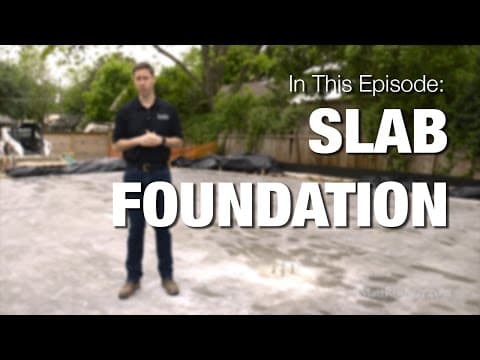
This article explores the process of constructing a concrete slab foundation, focusing on the importance of soil analysis, vapor barriers, reinforcement techniques, and proper curing methods to ensure durability and stability.
Concrete slab foundations are a prevalent choice in the southern United States, particularly the slab-on-grade variety. This article delves into the construction process of a steel-reinforced slab foundation, highlighting essential practices and considerations.
There are primarily two types of slab foundations:
Before construction begins, it is crucial to involve a structural engineer after the architectural design is complete. The structural engineer will then engage a geotechnical engineer to conduct soil borings. This analysis determines the type of soil present and its characteristics, which is vital for designing an appropriate foundation.
In this case, the soil exhibited a high plasticity index, indicating the presence of clay that could lead to movement over time. To counteract potential issues, a stiff slab design was necessary to withstand soil fluctuations.
A critical component of the foundation process is the installation of a vapor barrier. In this project, a durable vapor barrier known as Stego Wrap was used, available in 10 and 15 mil varieties. This barrier serves to prevent moisture from the soil from penetrating the slab, which is essential for maintaining the integrity of the foundation.
The vapor barrier is laid out with channels cut in a grid pattern. These channels are filled with a grid of rebar and concrete, which enhances the stiffness of the slab. This design ensures that the slab behaves as a single unit, distributing pressure evenly, much like a boat on water.
Once the rebar is placed and tied, additional reinforcement measures are implemented:
The concrete pouring day is a significant milestone in the construction process. A team of concrete specialists is involved, and in this instance, 100 yards of concrete were poured using a boom truck. Key elements during this phase include:
Curing is a vital step in ensuring the longevity and durability of the slab. In winter conditions, covering the slab with black plastic helps retain moisture and prevent rapid evaporation. This method is effective for about five to six days.
In warmer months, continuous watering is recommended, either through sprinklers or manual watering, for four to five days to ensure proper curing.
Constructing a concrete slab foundation involves careful planning and execution. From soil analysis to the installation of vapor barriers and reinforcement techniques, each step is crucial for creating a stable and durable foundation. By following best practices, builders can ensure that the foundation withstands the test of time and environmental challenges.