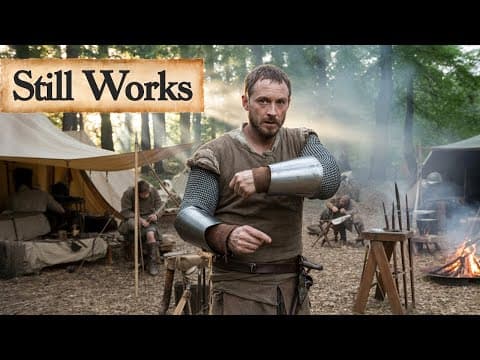
Explore seven medieval knight survival skills that remain relevant for modern preppers. From armor conditioning to mental visualization, these techniques offer valuable insights into effective combat readiness and adaptability.
Modern soldiers train with cutting-edge technology, advanced tactics, and sophisticated logistics. However, the most effective battle preparation methods may have been developed centuries ago by medieval knights. Behind the romantic images of shining armor and noble steeds, knights created battle preparation systems so effective that aspects of their training are still studied by elite military units today. This exploration reveals seven forgotten medieval combat preparation techniques that have stood the test of time, influencing modern warfare.
Today's soldiers often struggle with the weight of their gear, frequently training separately from their equipment until deployment. In contrast, medieval knights developed a progressive armor system that transformed their bodies while building combat readiness. This sophisticated physiological training program began years before wearing full battle armor, starting with padded gambesons and minimal mail. Young squires focused on movement patterns rather than protection, gradually adding weight to their armor in a way that aligned with their body's natural adaptation patterns.
Knights trained not just with armor but in relation to it. Specialized exercises addressed the movement limitations created by each armor component, and balance training compensated for the raised center of gravity that armor created. Remarkably, knights practiced a technique called armor mapping, mentally dividing their armored bodies into zones with different movement capabilities. This cognitive technique allowed them to adjust their fighting techniques based on the armor components they wore.
Knights also adapted their training to seasonal changes. Summer training focused on heat adaptation while winter training emphasized maintaining dexterity in cold weather gauntlets. Some systems even incorporated progressive sleep deprivation while armored, preparing knights for the realities of extended campaigns. This approach integrated equipment with identity, transforming armor into an extension of self rather than just a tool for battle.
Modern soldiers typically specialize in a primary weapon system with limited cross-training. Medieval knights, however, developed a comprehensive weapons rotation system that created adaptable fighters ready for any combat scenario. They identified seven fundamental weapon categories: sword, axe, mace, flail, spear, dagger, and improvised weapons.
Knights practiced a deliberate rotation, cycling through weapons on a schedule designed to highlight universal combat principles. For instance, they might work on sword techniques on one day and mace techniques the next. This method reinforced core principles rather than just weapon-specific techniques, allowing knights to develop neural patterns transferable across weapon types.
One of the most innovative elements of their training was translation drills, which involved switching between weapons mid-sequence. This built the neural flexibility to adapt instantly when primary weapons were lost or damaged in battle. Advanced training incorporated constraint practice, deliberately limiting certain movements to simulate battlefield injuries, forcing knights to adapt their weapon handling accordingly.
Before the advent of virtual reality training and combat simulators, medieval knights developed mental training techniques that prepared them for battles they had never experienced. Their visualization practice was a rigorous mental discipline that created neural pathways nearly identical to physical experience. Knights would visualize basic sword strikes or defensive movements in vivid detail, progressing to complete battle sequences and terrain challenges.
Knights incorporated all five senses into their visualizations, not just seeing the combat but also feeling the weight of weapons, hearing the clash of steel, and even tasting the dust of battle. Historical manuscripts describe exercises where knights would spend hours mentally rehearsing specific combat scenarios with such intensity that they would physically sweat from the imagined exertion.
Modern military units rely on calculated nutrition and stimulants for combat performance, while medieval knights developed a strategic fasting system that enhanced battlefield awareness and endurance. This sophisticated system manipulated metabolism to improve combat capabilities, training in various nutritional states: fully fed, partially fasted, and completely fasted.
Pre-battle protocols typically included 16 to 20 hours of fasting followed by a small meal two hours before combat. This practice optimizes mental clarity and stabilizes energy, enhancing physical performance. Knights conditioned themselves to maintain fighting effectiveness regardless of when they last ate, creating resilience independent of external resources.
Modern military units often struggle with sleep deprivation, relying on stimulants to maintain alertness. Medieval knights developed a sleep training system that optimized cognitive function under sleep-restricted conditions. Their segmented sleep training conditioned the body to obtain rest in multiple shorter periods rather than a single extended sleep.
Knights could effectively rest in short increments while maintaining environmental awareness, a skill that modern military units still strive to develop. Seasonal adaptations characterized their systems, adjusting sleep patterns based on available natural light and maximizing rest during darker periods.
Modern military training often occurs in controlled environments, while medieval knights developed an environmental conditioning system that prepared them for the battlefield's harsh realities. This program systematically exposed knights to environmental stressors such as heat, cold, rain, and mud while performing precise combat movements.
Knights trained specific combat techniques modified for each environmental challenge, ensuring they maintained technical precision under adverse conditions. They practiced transitioning between different conditions without losing combat effectiveness, creating warriors who could adapt instantly during battle.
After exploring these seven battle preparation methods, we should reconsider our view of medieval combat training as primitive. Knights developed integrated systems that prepared the whole warrior for the chaotic reality of combat. They understood that combat effectiveness depends on the integration of physical training, mental preparation, equipment familiarity, and environmental adaptation.
In our pursuit of technology-driven warfare, we may have lost something fundamental about creating warriors ready for the unpredictability of actual combat. The most powerful insight from medieval battle preparation isn't any specific technique but the integrated approach to warrior development. This methodology, which emphasizes the connection between all aspects of training, is something modern military training is only beginning to rediscover.
In conclusion, the question isn't whether these medieval techniques still work; many elite military units are quietly reintegrating versions of them. The real question is whether we are humble enough to learn from those we have been taught to view as technologically inferior. In warfare, where human capability ultimately determines outcomes, the most dangerous battlefield weakness might be our modern arrogance—the belief that newer always means better, especially when preparing warriors for the timeless realities of combat.