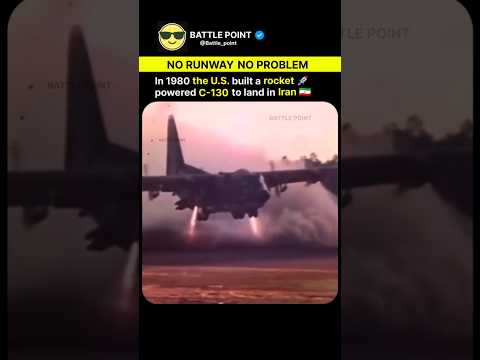
In 1980, the U.S. military faced a unique challenge during the Iran hostage crisis, leading to the development of a rocket-powered C-130 aircraft. This innovative solution aimed to facilitate landings in hostile environments without traditional runways. The project, known as Operation Credible Sport, showcased the ingenuity of military engineering and the lengths to which the U.S. would go to rescue hostages.
In 1980, the United States faced a significant crisis when American diplomats and citizens were taken hostage in Iran. The situation escalated tensions between the two nations and prompted the U.S. government to seek innovative solutions for a potential rescue operation. One of the most remarkable responses was the development of a rocket-powered C-130 aircraft, designed specifically to land in hostile environments without the need for traditional runways. This initiative was known as Operation Credible Sport.
The Iran hostage crisis began on November 4, 1979, when a group of Iranian students stormed the U.S. Embassy in Tehran, taking 52 American hostages. The crisis lasted 444 days and became a pivotal moment in U.S.-Iran relations. As diplomatic efforts to secure the hostages' release stalled, the U.S. military began to explore alternative options, including a potential rescue mission.
One of the primary challenges in executing a rescue operation was the lack of suitable landing zones near the embassy. The terrain in Iran was not conducive to conventional military aircraft, which typically require long runways for takeoff and landing. This limitation necessitated a creative engineering solution that could enable aircraft to operate in confined spaces.
The C-130 Hercules, a versatile military transport aircraft, was chosen as the base for this innovative project. Engineers proposed to enhance the aircraft's capabilities by adding rocket boosters, allowing it to take off and land in shorter distances than normally possible. The idea was to equip the C-130 with solid-fuel rockets that would provide the necessary thrust for these unconventional operations.
The modifications to the C-130 included:
Before any operational deployment, extensive testing was required to ensure the safety and effectiveness of the modified C-130. The testing phase included:
Despite the innovative design, the testing revealed several challenges, including stability issues during flight and the need for precise control during landings. These challenges highlighted the complexities of modifying an existing aircraft for such a unique purpose.
Ultimately, Operation Credible Sport was never executed as planned. The rescue mission was called off after the failed attempt known as Operation Eagle Claw, which took place in April 1980. The mission faced numerous obstacles, including mechanical failures and adverse weather conditions, leading to a tragic outcome.
While the rocket-powered C-130 was never used in combat, the project demonstrated the U.S. military's commitment to innovation and problem-solving in the face of unprecedented challenges. The engineering feats achieved during this initiative contributed to future developments in military aviation and showcased the potential for unconventional solutions in crisis situations.
The story of the rocket-powered C-130 is a testament to the ingenuity and resourcefulness of military engineers during a time of crisis. Although Operation Credible Sport did not culminate in a successful rescue, it remains a fascinating example of how necessity can drive innovation. The lessons learned from this project continue to influence military strategies and engineering practices today, reminding us of the lengths to which nations will go to protect their citizens and uphold their values.