Despite claims that battle tanks are outdated due to advancements in drone technology and anti-tank weapons, military leaders continue to emphasize their importance in modern warfare. Tanks, when used in conjunction with infantry and other support systems, remain crucial for territorial conquest and battlefield effectiveness.
The question we are dissecting today is straightforward: Are main battle tanks (MBTs) an obsolete tool in 21st-century warfare? Before we answer, let’s be direct. Open your Telegram or Instagram, and you will be bombarded with videos of FPV drones turning million-dollar tanks into scrap metal, all set to funky music. Comments like "tanks are finished" and "they're dinosaurs in the era of smart missiles" are common. It seems simple: a device costing a few hundred dollars can annihilate a 60-ton steel beast worth millions. Case closed, right? We should bury the tank alongside the war horse and bayonet as relics of the past.
However, as often happens in discussions about warfare, the answer is not so straightforward. While the internet declares the death of the tank, those who truly risk their lives on the front lines, such as Russian and Ukrainian soldiers, tell a very different story. Today, we will analyze why, despite the presence of FPV drones, Javelin missiles, and mines, military commanders from Russia, Ukraine, and other countries at war continue to request more tanks.
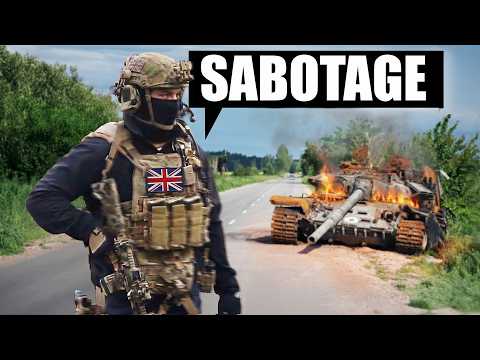
Ignoring tanks poses a significant risk. Despite the enormous losses of tanks on both the Russian and Ukrainian sides—over 4,300 confirmed destroyed Russian armored vehicles—the military high command is clear: ignoring tanks is an unacceptable risk. Why such a strong statement? Because tanks, when operating in conjunction with infantry, can accomplish something no other tool of war can: conquer and maintain gained territory. Neither the most advanced air power, the most precise artillery, nor the deadliest drones can achieve this alone. In a war like the one in Ukraine, where two conventional armies are engaged, the ultimate goal is to take territory from the enemy, plant your flag, and declare, "This is now mine."
The concept of combined arms may sound formal, but it is crucial. How you use your tools of war is as important as the tools themselves. Throughout 2022-2023 and much of 2024, both Russian and Ukrainian forces made the same mistake: sending tanks to advance solo without infantry support, adequate air cover, or electronic warfare protection. The result? They became easy targets for drones and modern anti-tank weapons. However, when executed correctly, the story changes dramatically. We have seen armored formations successfully executing combined arms maneuvers, with tanks advancing alongside mechanized infantry, artillery coordinating with reconnaissance drones, and FPV drones eliminating specific threats. Everything functions as a single war machine. While it doesn’t always work, this is the most effective way to operate.
This is not a new concept; the doctrine of combined arms has been the cornerstone of modern warfare since World War II. It doesn’t matter if you are driving the most advanced tank on the planet, like the Abrams X electric model of 2030, or an old T-55 pulled from a museum. If you use it poorly, it will end up as scrap.
The argument that a $900 drone can destroy a $5 million tank is catchy, and I have said it myself. However, comparing their unit prices in isolation is a dangerous oversimplification. A tank is not a disposable item; it is a reusable combat platform. If it survives on the battlefield, it can inflict damage worth hundreds of thousands or even millions of dollars on the enemy. It can destroy multiple vehicles, machine gun nests, bunkers, and provide decisive fire support for advancing infantry. Let’s be realistic: weapons are not designed to be cheap; they are designed to be effective in eliminating armored soldiers, fortified positions, or critical infrastructure. If price were the only factor, we would still be fighting with rusty swords and skinny horses. The cost-benefit logic in warfare is much more complex than a simple price tag comparison.
A valid point many raise is that most tanks we see in combat today, such as the Abrams, Leopard, or the ubiquitous Soviet family of T-series tanks (T-72, T-80, T-90), were designed decades ago. They were conceived during the Cold War for a very particular type of confrontation: massive tank battles in the open plains of Europe. However, the current war in Ukraine presents a different story. It is an environment saturated with portable anti-tank weapons, surveillance drones, and attack drones in every corner of the sky, along with electronic warfare that interferes with, disables, or deceives. This creates a battlefield for which these original designs were not fully optimized.
So, does this mean we should get rid of tanks? Not at all. It means we need new tank concepts or at least modern adaptations of existing models. This has been happening for over a decade, and the war in Ukraine has made this point clearer than ever. Many of these tanks were designed with modularity and constant upgrades in mind. Today, we see vehicles that were born over 40 years ago but are now equipped with active protection systems like Trophy or Arena, modern fire control systems, and next-generation reactive armor. Yes, those famous cage armor structures may seem like a makeshift or rudimentary solution, but they are a vital adaptation against FPV drones attacking from above. If a simple metal grid can make the difference between surviving or ending up as shrapnel in a burning tank, then of course, I will use it. It’s not about aesthetics; it’s about functionality and saving lives.
Consider this: If tanks were truly obsolete or useless, why does Ukraine continue to plead for more tanks from its NATO allies after months of brutal combat and massive losses? Why does Russia continue to manufacture T-80 and T-90 tanks in its factories? They must still be doing something very well on the battlefield, don’t you think? And don’t just take my word for it; listen to Lieutenant General Ben Hodges, a veteran of two wars with five distinctions, who has analyzed this topic at the highest military levels.
For the skeptics, the phrase "the tank is obsolete" has become a cliché. It resurfaces every time a new threat appears on the battlefield. Former British military officer Nicolas Rumont perfectly summarizes this: "Every now and then, people like to suggest that tanks are obsolete. There’s some new conflict, some new tanks get destroyed, and people start asking that question. This is nothing new; since the end of World War I, it has been said that mechanized armored vehicles were a thing of the past. Then came World War II, where tanks not only returned but completely dominated the battlefield. Even in 1960, a British military historian ironically warned that for the last 40 years, the highest authorities have announced that the tank is dead or dying, and each time it has risen from the grave. So yes, the tank has died ten times and risen eleven.
To silence those who repeat that the tank is dead, throw this truth in their face: the trinity of land warfare. A modern tank combines three things that no other combat system offers at the same level:
The tank of the future will not just be a cannon on tracks with powerful engines and load capacity; it will evolve into multifunctional platforms that are resilient, mobile, and capable of integrating electronic warfare systems, their own drones, and active protection against modern threats. The clunky Russian tanks with their improvised anti-drone armor are already heading in that direction. Imagine a tank that not only fires but also blinds enemy sensors, launches swarms of micro-drones, or electronically protects the infantry accompanying it.
No, the tank is not dead; it is wounded—challenged like never before—but its tactical value remains intact.
Warfare is an ever-evolving ecosystem, a race between attack and defense. FPV drones and anti-tank weapons did not mark the end of the tank but the beginning of its transformation. The world’s armies are not abandoning their tanks; they are investing in making them more resilient, smarter, and better connected within a combat system where everything, from satellites to FPV drones, operates in unison. The question is no longer whether tanks are obsolete but how we can make them even more useful and survivable. This is the question that engineers and military strategists around the globe are currently addressing. Believe me, the future of warfare has become more interesting than ever.