This blog post provides an in-depth look at the various special forces units in the U.S. military, detailing their missions, training, and operational capabilities. From Delta Force to Navy SEALs, each unit plays a crucial role in national security and counterterrorism efforts.
The United States military is home to several elite special forces units, each with unique missions and capabilities. This blog post will explore these units in detail, highlighting their roles, training, and operational structures.
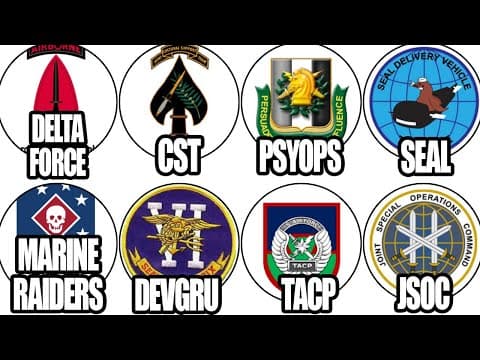
Delta Force, officially known as the First Special Forces Operational Detachment, is the U.S. Army's most elite and secretive counterterrorism unit. Operating under the Joint Special Operations Command, it is classified as a tier 1 force.
Delta Force's primary missions include:
Operators undergo extensive training in:
Delta Force is based at Fort Liberty, North Carolina, and is organized into four main operational squadrons (A, B, C, and D), each consisting of three troops. New members typically start in assault troops before advancing to specialized roles. The elite black squadron handles the most sensitive missions and maintains its own covert aviation support unit.
The U.S. Army Special Forces, commonly known as the Green Berets, specialize in unconventional warfare and operate under the U.S. Army Special Operations Command.
Their core tasks include:
Green Berets are organized into special forces groups, each responsible for specific geographic regions:
The National Guard maintains the 19th and 20th groups, focusing on Southeast Asia and Latin America, respectively.
The 75th Ranger Regiment is a premier light infantry force specializing in rapid, high-intensity missions.
Primary responsibilities include:
The regiment consists of three battalions (1st, 2nd, and 3rd), each with approximately 600 soldiers, and a regimental special troops battalion that provides reconnaissance and intelligence support.
The 160th Special Operations Aviation Regiment, known as the Night Stalkers, is the Army's premier aviation unit for special operations.
They specialize in:
Night Stalkers operate specialized helicopters, including the MH-60 Blackhawk, MH-6 Littlebird, and MH-47 Chinook, equipped for precision navigation and attack capabilities.
The Intelligence Support Activity is one of the most secretive U.S. Army units, created to provide specialized intelligence support to special operations forces.
Primary functions include:
ISA consists of around 300 personnel organized into various elements, including administration, training, signals, intelligence, human intelligence, and direct action teams.
Cultural Support Teams are composed of specially trained female soldiers who deploy alongside U.S. Army Special Operations Forces.
Their mission is to engage with women and adolescents in regions where cultural norms restrict male soldiers. They gather intelligence and build rapport with communities to facilitate mission success.
The 95th Civil Affairs Brigade operates under the U.S. Army Special Operations Command, specializing in coordinating between military forces and civilian authorities.
Their missions include:
The U.S. Navy Sea, Air, and Land Teams, known as SEAL teams, are the Navy's primary special operations force.
They specialize in:
SEAL training, known as Basic Underwater Demolition/SEAL (BUD/S), is one of the most physically and mentally demanding programs in the military.
SEAL Delivery Vehicle Teams are specialized SEAL elements that use submersible vehicles to transport operators underwater.
These missions often involve infiltration into high-security coastal areas and are conducted in support of reconnaissance and direct action missions.
SWCC are naval personnel trained to operate and maintain high-speed boats that support SEAL missions.
They provide insertion, extraction, and fire support for SEALs in coastal and riverine environments.
The Naval Special Warfare Development Group, commonly known as Dev Group or SEAL Team 6, is the Navy's tier 1 special mission unit.
Dev Group conducts sensitive operations, including counterterrorism and hostage rescue, and recruits exclusively from experienced SEALs.
Pararescue specialists, known as PJs, are elite combat rescue operators trained to recover personnel from hostile environments.
Their mission includes rescuing downed pilots and civilians in combat or disaster zones, and they are trained as paramedics and combat divers.
Combat controllers are trained to establish assault zones and coordinate air support in austere locations.
They set up landing zones, direct air strikes, and integrate air assets with ground operations.
TACP members work alongside Army and Marine units to coordinate close air support.
They are embedded with ground forces, calling in precision air strikes and artillery during combat operations.
Special Reconnaissance Operators gather advanced meteorological, geospatial, and battlefield intelligence behind enemy lines.
The 24th Special Tactics Squadron is the Air Force's Tier 1 Special Mission Unit under JSOC.
It combines PJs, CCTs, TACPs, and SR operators for highly classified missions, often working alongside Delta Force and Dev Group.
The Marine Raider Regiment is the Marine Corps's primary special operations force.
They conduct direct action, special reconnaissance, foreign internal defense, and counterterrorism missions.
JSOC oversees the U.S. military's tier 1 special mission units, including Delta Force and Dev Group.
It coordinates inter-service special operations, joint training, and combined missions, responsible for some of the most sensitive military operations globally.
The U.S. Coast Guard's Deployable Specialized Forces are elite units trained to respond to maritime security threats.
These forces include:
Psychological Operations, officially known as Military Information Support Operations, are specialized units under U.S. Army Special Operations Command.
Their mission is to influence foreign populations through information campaigns and targeted messaging.
This detailed overview of every special forces unit in the U.S. military highlights the diverse capabilities and critical roles these units play in national security and counterterrorism efforts. Each unit is uniquely trained and equipped to handle a variety of missions, ensuring the safety and security of the nation.