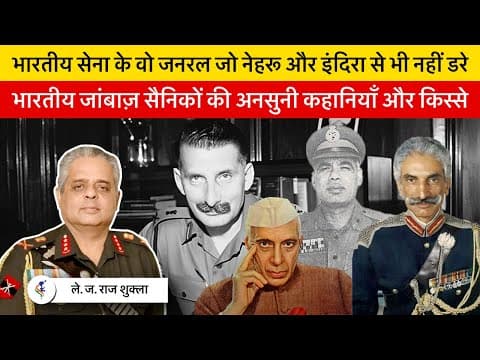
Lt. Gen. Raj Shukla discusses the pivotal roles of Generals Sam Manekshaw and Saggat Singh in transforming the Indian Army into a formidable force, emphasizing their leadership qualities, strategic insights, and the importance of military professionalism in overcoming challenges.
In a recent discussion, Lt. Gen. Raj Shukla elaborated on the significant contributions of two legendary figures in the Indian Army: General Sam Manekshaw and General Saggat Singh. Their leadership during critical periods, particularly the 1971 Indo-Pak war, not only shaped military strategies but also revitalized the morale and effectiveness of the Indian Armed Forces.
The conversation began with a reflection on the leadership ecosystem within the Indian Army, which has been instrumental in its evolution into a modern and capable fighting force. Lt. Gen. Shukla emphasized that strong military leadership is akin to a protective shield for the organization. Without it, the army risks decay and inefficiency.
A notable anecdote shared was about the early days of the Indian Army's leadership structure, where the experience of senior officers was often questioned. Lt. Gen. Shukla recounted a humorous yet telling exchange between Prime Minister Nehru and General Thakur Nathu Singh, highlighting the need for experienced leaders in high positions. This exchange underscored the importance of recognizing and valuing military experience in leadership roles.
General Sam Manekshaw is often celebrated as the architect of the 1971 victory against Pakistan. His strategic foresight and ability to inspire troops were pivotal in the successful execution of military operations. Lt. Gen. Shukla described Manekshaw as a leader with profound depth and gravitas, whose decisions were marked by a blend of courage and wisdom.
General Saggat Singh, though less known than Manekshaw, played an equally crucial role. His leadership during the war was characterized by aggressive tactics and a commitment to achieving objectives against formidable odds. Lt. Gen. Shukla noted that Singh’s ability to think creatively and act decisively made him a standout leader in the Indian military history.
Both generals were credited with rejuvenating the Indian Army's spirit post the 1962 Sino-Indian War, which had left the military's morale in tatters. Their leadership not only restored confidence but also redefined the operational strategies of the army, making it more adaptable and resilient.
The discussion also touched upon the lessons learned from past conflicts, particularly the importance of risk-taking in military operations. Lt. Gen. Shukla emphasized that successful military campaigns often require leaders to make bold decisions, as exemplified by the rapid advance to Dhaka during the 1971 war.
Lt. Gen. Shukla articulated that national security is fundamentally a matter of talent and leadership. He stressed the need for a robust leadership framework that encourages innovation and adaptability within the military ranks. This is crucial not only for operational success but also for maintaining a strategic edge in an increasingly complex geopolitical landscape.
To ensure the continued success of the Indian Army, Lt. Gen. Shukla called for a focus on nurturing future leaders who embody the qualities of Manekshaw and Singh. This includes fostering an environment where military professionals can thrive and develop their skills to meet contemporary challenges.
The discussion concluded with a call to action for the Indian military to build on the legacy of its past leaders. By embracing the lessons of history and fostering a culture of strong leadership, the Indian Army can continue to evolve into a formidable force capable of addressing the challenges of the future. Lt. Gen. Shukla's insights serve as a reminder of the critical role that leadership plays in shaping not just military outcomes, but also the broader security landscape of the nation.