The British Army emphasizes mental resilience training alongside physical training for infantry soldiers. This approach combines theory and practice to enhance soldiers' mental robustness, preparing them for the stresses of combat. The training has evolved to include team dynamics and mental rehearsal techniques, ensuring soldiers are better equipped for challenges. The Army continuously reviews its methods to adapt to changing mental health needs, positioning itself as a leader in military well
A career as an infantry soldier is undeniably tough on both the body and the mind. The British Army has recognized the importance of mental resilience training, integrating it into the rigorous physical training that soldiers undergo. This blog post explores how the Army trains its soldiers to develop mental toughness, the evolution of these training methods, and how they compare to other military forces around the world.
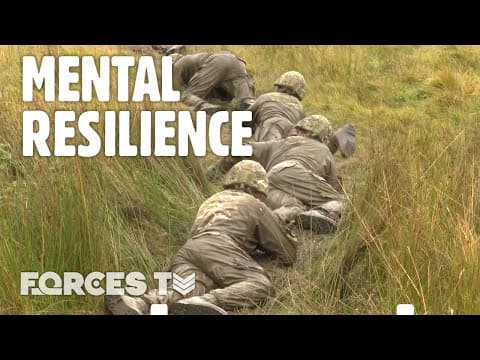
Mental resilience is crucial for soldiers, especially in high-stress environments like the battlefield. The Army's training program aims to prepare soldiers not just physically but also mentally for the challenges they will face. During training, soldiers engage in various physical tasks that simulate the demands of combat, such as lifts, carries, and drags. However, the training goes beyond physical endurance; it also focuses on building mental robustness.
In the training sessions, soldiers are subjected to scenarios designed to push them to their limits. For instance, they may be given tight timings that are difficult to achieve, while instructors shout and create an atmosphere of urgency. This combination of physical exhaustion and mental pressure helps soldiers learn to cope with stress and perform under challenging conditions.
Unlike previous training methods that primarily focused on physical conditioning, the current approach incorporates theoretical lessons. Soldiers participate in classroom sessions where they learn about the human mind and various coping mechanisms for stress. This theoretical knowledge is then applied in practical exercises, creating a comprehensive training experience that marries theory with practice.
The mental resilience training program has evolved since its inception in 2013. Initially, the focus was on individual resilience, but it has now shifted to include the team dynamics that affect each soldier's mental robustness. This change acknowledges that soldiers operate as part of a unit, and their resilience is interconnected.
A significant component of the training involves mental rehearsal. For example, soldiers may practice raiding a building in their minds before executing the actual operation. This technique helps them visualize the process, making them feel as though they have already experienced the scenario, which can enhance their performance in real situations.
The British Army's approach to mental resilience training is considered advanced, although other militaries have different strengths. For instance, the Australian Army employs clinical psychologists extensively but lacks a comprehensive resilience training component. The British Army has made strides in this area, proving that their training methods improve performance and mental fitness.
The Army is committed to continuously reviewing and improving its mental resilience training. With mental health becoming an increasingly important topic, the Army has developed programs like OP SMART (Optimizing Performance through Stress Management and Resilience Training). This initiative includes mental resilience training and mental health awareness training, which are rolled out across the entire Army.
The emphasis on mental health is crucial, especially in today's challenging environment. The Army recognizes the need to keep mental resilience at the forefront of their training programs, ensuring that soldiers are equipped with the skills necessary to maintain their mental fitness.
The British Army's approach to training soldiers in mental resilience is a comprehensive and evolving process that combines physical and mental challenges. By integrating theoretical knowledge with practical exercises, the Army prepares its soldiers for the rigors of combat while fostering a culture of mental health awareness. As the Army continues to adapt its training methods, it remains a leader in developing resilient soldiers capable of facing the challenges of modern warfare.