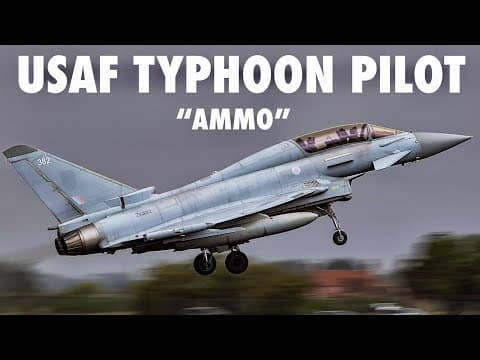
An F-22 pilot shares his unique experience of flying the RAF Typhoon, detailing the challenges and rewards of the exchange program, the differences in training, and the cultural experiences in the UK.
In a fascinating exchange program, an F-22 pilot recounts his journey of flying the RAF Typhoon. This blog post delves into the details of how the exchange came about, the training process, and the cultural experiences he encountered while living in the UK.
The pilot, referred to as "Ammo," explains that exchange tours were available to most USAF pilots, but at the time, no other Raptor pilot had participated due to the community's maturity. His squadron commander presented him with the opportunity to join the Typhoon exchange, which he and his wife eagerly accepted.
While exchange tours can be career-enhancing, they often come with risks. Historically, such tours were seen as career killers within the USAF, making it difficult for pilots to return to their original aircraft after several years away. However, Ammo was motivated by his desire to fly as much as possible, minimizing administrative duties.
Upon arriving at the RAF, Ammo underwent initial training, including a centrifuge experience at Cranwell, which simulated flying a Typhoon while pulling G-forces. His first day on the squadron involved a lot of administrative tasks and fitting for flying gear, followed by ground school and simulator training.
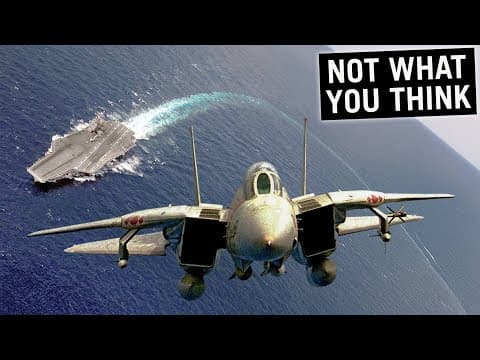
Ammo noted that while there were significant differences between flying a fourth-generation Typhoon and a fifth-generation Raptor, many concepts were similar. The biggest adjustment was adapting to British terminology and measurements, such as switching from pounds to liters for fuel.
On his first flight in the Typhoon, Ammo was surprised to find himself flying solo at a low altitude of 250 feet AGL, a stark contrast to his previous experiences in the Raptor, where he rarely flew below 500 feet. This solo flight was exhilarating, even though the weather conditions limited his low-level flying to flat terrain.
A few sorties later, Ammo experienced a performance takeoff in the Typhoon, which involved a unique technique of pulling back on the stick to achieve a steep climb. This was a different approach compared to the Raptor, where pilots are trained to manage pitch angles carefully during takeoff.
Ammo highlighted the Typhoon's multi-role capabilities, including its ability to carry various munitions and perform well in air-to-air combat. Its agility and turn rate were also noted as significant advantages in dogfighting scenarios.
Conversely, he pointed out limitations in the Typhoon's radar and low-speed maneuverability. The existing radar system struggled compared to newer technologies, and the aircraft's design made it less effective at slower speeds, requiring careful management during engagements.
As an instructor, Ammo found great satisfaction in training new pilots transitioning from basic training to flying the Typhoon. He focused primarily on air-to-air tactics, leveraging his experience from the Raptor to enhance the training curriculum.
Despite being an American in a British squadron, Ammo felt welcomed and enjoyed the camaraderie with his colleagues. He appreciated the banter and discussions about cultural differences, particularly regarding American politics.
Living in Lincolnshire, Ammo and his family enjoyed the slower pace of life and the rich history of the area. He cherished visits to historical sites and the opportunity to fly over landscapes steeped in aviation history.
Ammo found the food in the UK to be enjoyable, especially when it came to curry houses and traditional pubs. He appreciated the unique cultural experiences, from local customs to historical landmarks.
Some of Ammo's most memorable flights included low-level flying through the Lake District and flying alongside a Spitfire. He also shared anecdotes about close calls with birds during takeoff and landing, which were captured by aviation enthusiasts.
Despite the challenges of maintaining connections after returning to the States, Ammo still keeps in touch with former squadron mates and values the friendships formed during his time in the UK.
Ammo's experience flying the RAF Typhoon as an F-22 pilot highlights the unique challenges and rewards of military exchange programs. His journey not only enriched his flying skills but also deepened his appreciation for British culture and history. The insights shared in this blog post provide a glimpse into the life of a pilot navigating the complexities of different aircraft and cultures.