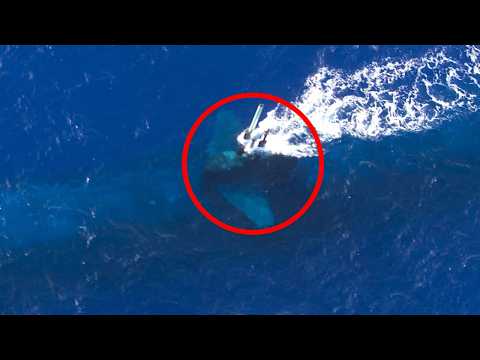
The US Navy has developed the Dry Combat Submersible, a groundbreaking vessel designed to enhance the operational capabilities of Navy SEALs during underwater missions, addressing long-standing challenges related to cold-water exposure and mission effectiveness.
Beneath the waters off Florida's coast, the US Navy has achieved a significant milestone that had eluded them for over four decades. After countless failed attempts and billions of dollars spent, they have finally created a vessel capable of fundamentally transforming how their elite special operations forces conduct underwater missions.
For years, Navy SEALs faced extremely challenging conditions during underwater missions. Inside their SEAL Delivery Vehicles (SDVs), these elite forces had to endure seemingly endless hours fully submerged in frigid water as they transited to their objectives. In the Navy’s Mark 11 SDV, operators would spend up to nine hours exposed to the elements while traveling distances of 36 nautical miles. Wearing wetsuits and scuba gear the entire time, they couldn't even hydrate during these lengthy transits. Even in warmer regions, the considerable depths at which submersibles had to travel meant that water temperatures could still be dangerously low.
The impact on combat effectiveness was profound. When SEALs finally reached their targets—whether it was a hostile shoreline, an enemy vessel, or underwater infrastructure—they were often already battling fatigue and the early stages of hypothermia. For missions requiring precise movement, steady hands, and sharp decision-making, this cold-induced deterioration could mean the difference between success and failure. Lieutenant Commander Christopher J. Kelly highlighted this issue in a 1998 study, concluding, "Water temperature can be a more limiting factor than battery capacity."
The Navy had been trying to solve this problem since the 1980s, but their attempts proved woefully inadequate. Their first major effort, the Advanced SEAL Delivery System, was plagued by technical issues, and after years of delays and cost overruns, it was destroyed in a fire in 2008. A follow-on Joint Multi-Mission Submersible program was canceled just two years later. The Navy's "wet" submersibles, while stealthy and effective for shorter missions, simply couldn't protect their occupants from the punishing effects of prolonged water exposure.
As global tensions rose and underwater operations became increasingly crucial to national security, the need for a revolutionary approach became clear. In 2016, the US Special Operations Command launched an initiative for a new vessel capable of providing a significant leap forward in Navy SEAL transportation. The $166 million contract went to Lockheed Martin, who partnered with British submarine manufacturer MSubs to combine American defense expertise with European submarine design innovation.
The team based their proposal on MSubs' existing S351 Nemesis platform, which evolved from earlier successful designs. While those earlier vessels were small enough to fit in submarine dry deck shelters, the S351 represented a larger, more capable platform—exactly what the Navy needed for its new underwater vehicle. The initial order called for three prototype vessels, but the project soon proved more ambitious and expensive than initially planned, with development costs rising to $236 million by 2018.
Despite skepticism, this project steadily progressed from design to reality. By early 2023, after years of careful development and rigorous testing, the first two vessels were ready for operational trials. In March of that year, one of these prototypes departed Lockheed's Palm Beach facility for open-water testing. Two months later, program manager John Conway received the news they had been waiting for: the operational test report showed the vessel had exceeded expectations. By June, the Dry Combat Submersible (DCS) achieved Initial Operational Capability.
At first glance, the Dry Combat Submersible appears deceptively simple: a sleek, 39-foot vessel with a beam of just under eight feet, weighing just under 15 and a half tons when fully loaded. However, beneath its aluminum and fiberglass hull lies an intricate system engineered to revolutionize underwater operations.
The DCS divides its pressurized interior into three distinct sections. In the aft command center, a two-person crew pilots the submersible through waters up to 330 feet deep. The main compartment accommodates eight fully-equipped SEALs, quadrupling the passenger capacity of its predecessor. The central section houses the vessel's most innovative feature: a sophisticated lock-in/lock-out chamber capable of operating at depths of nearly 100 feet, allowing operators to exit and enter while remaining completely submerged, maintaining stealth throughout their mission.
Lockheed Martin's C6ISR vice president, Gregg Bauer, explains, "The DCS provides safe, clandestine delivery for occupants over long distances in a completely dry environment. Occupants arrive at their objective warm, rested, hydrated, and ready, making this vessel a key advantage in mission success."
The submersible's capabilities extend beyond operator comfort. Its all-electric propulsion system maintains near-silent operation while cruising at five knots, crucial for avoiding detection in hostile waters. With an operational range of 60 nautical miles and endurance exceeding 24 hours—triple that of previous vehicles—it offers unprecedented flexibility for mission planners. The integrated suite includes an inertial navigation system and Doppler Velocity Log for precise underwater positioning, while sonar and fathometer systems provide detailed awareness of the surrounding environment. For mission coordination, the vessel is equipped with both an underwater telephone and UHF radio communications.
The DCS dramatically expands the scope of what special operations forces can achieve underwater. Navy SEALs can now infiltrate enemy ports undetected, conduct underwater sabotage operations, or slip behind enemy lines while maintaining peak physical and mental condition. The vessel also supports underwater demolition missions and provides new options for gathering intelligence in denied areas. This versatility opens up possibilities that were previously impractical due to the physical toll of cold-water transit. Navy Captain Randy Slaff noted that the introduction of the DCS "ends a capability gap of 15 years—more than 15 years."
However, for all its advantages, the DCS also comes with a major challenge: unlike the “wet” submersibles it replaces, it cannot deploy from the Navy's current fleet of submarines. Its size makes it too large to fit inside existing Dry Deck Shelters, which allow submarines to launch smaller vessels while submerged. This constraint has required alternative deployment methods. For now, surface ships such as amphibious warfare vessels serve as the primary launch platforms. The military has also begun exploring additional options; in at least one test, a DCS prototype was successfully transported inside a shipping container aboard a C-17 Globemaster III cargo aircraft.
The need for solutions becomes more pressing as the Navy prepares to retire its four Ohio-class guided-missile submarines—vessels specifically designed to support special operations—before the end of this decade. While a new dedicated replacement for these platforms remains decades away, development has already begun on an improved "DCS Next" variant, with one key goal being deployment capability from Virginia-class attack submarines.
Even as the Navy looks to future variants, the significance of today's DCS should not be underestimated. After decades of attempting to solve the punishing realities of underwater transit, the US military has finally fielded a vessel that could fundamentally reshape how Navy SEALs and their international counterparts operate beneath the waves. Gregg Bauer noted, "The Dry Combat Submersible has the potential to transform undersea warfare for special operators." As naval warfare continues to evolve and underwater operations grow more complex, this breakthrough in subsurface transport may prove to be a turning point in how nations project power at sea.