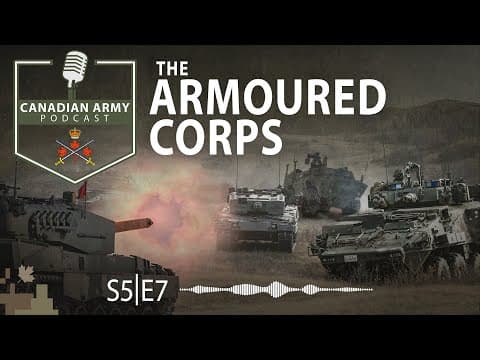
The Armoured Corps plays a crucial role in modern warfare by providing mobility, firepower, and protection on the battlefield. This blog post explores the evolution of armoured forces, their organization within the Canadian Army, and the importance of combined arms operations.
In the realm of military operations, the effectiveness of various combat arms is often determined by their ability to work together as a cohesive unit. The Armoured Corps, with its unique capabilities, plays a pivotal role in this combined arms approach. In this blog post, we will delve into the functions, evolution, and organization of the Armoured Corps, particularly within the context of the Canadian Army.
The battlefield is a complex environment where different combat arms must collaborate to achieve success. Tanks, infantry, and artillery each have their strengths and vulnerabilities. For instance, tanks operating independently are highly vulnerable, as are infantry and artillery without adequate support. The key to overcoming these vulnerabilities lies in the concept of combined arms, where different forces work together to maximize their effectiveness.
Historically, the need for rapid mobility in warfare has been recognized for centuries. Cavalry units, often mounted on horses, were the primary means of achieving this mobility. However, with the advent of industrialization and the introduction of more lethal weaponry, the traditional cavalry model became obsolete. World War I highlighted the need for protected mobility to traverse machine gun-swept terrain, leading to the development of tanks.
Today, modern armoured forces are equipped with advanced engine technology and designs that allow them to move quickly across lethal terrain while providing protection. This evolution has resulted in a force that combines mobility, firepower, and protection, enabling them to exploit opportunities on the battlefield effectively.
The Armoured Corps is organized into various categories based on the type of armoured cavalry they represent: light, medium, and heavy. Each category is optimized for different roles on the battlefield:
In the Canadian Army, the Armoured Corps is undergoing a transformation to centralize heavy armour under one regiment while optimizing other regiments for medium and light roles. This non-symmetric approach allows for a more effective allocation of resources and capabilities.
The Armoured Corps fulfills multiple roles within a military formation. For example, in a brigade, heavy armoured cavalry supports infantry in close combat, while medium and light armoured cavalry units operate on the flanks to find and shape the enemy. This division of roles ensures that the brigade can effectively close in on enemy positions and achieve its objectives.
A critical function of the Armoured Corps is to find the enemy and shape the battlefield. This involves:
These tasks are complex and require a well-coordinated effort from all arms involved. The Armoured Corps plays a vital role in this process, ensuring that the main body can conduct assaults successfully.
The design and capabilities of armoured vehicles have evolved significantly over the years. The concept of the Iron Triangle—balancing mobility, firepower, and protection—remains central to vehicle development. Modern vehicles aim to enhance lethality while reducing physical weight, allowing for greater maneuverability without sacrificing protection.
Additionally, advancements in technology have led to the development of optionally crewed and automated platforms. These innovations promise to revolutionize how armoured forces operate on the battlefield, enabling a more flexible and responsive combat approach.
Reservists play an essential role in the Armoured Corps, providing critical support and manpower for operations. While the maintenance of heavy platforms like the Leopard 2 tanks poses challenges for reserve units, efforts are underway to ensure that reservists have access to more manageable platforms for training and operations.
The integration of regular and reserve forces is crucial for maintaining operational readiness. By fostering relationships between regular and reserve units, the Armoured Corps can enhance training opportunities and ensure that all personnel are prepared for deployment.
The Armoured Corps is a vital component of modern military operations, providing the mobility, firepower, and protection necessary for success on the battlefield. As the Canadian Army continues to evolve, the focus on combined arms operations and the integration of new technologies will be essential in meeting future challenges. The commitment to maintaining a well-trained and equipped Armoured Corps ensures that Canada remains prepared to respond effectively in any operational environment.