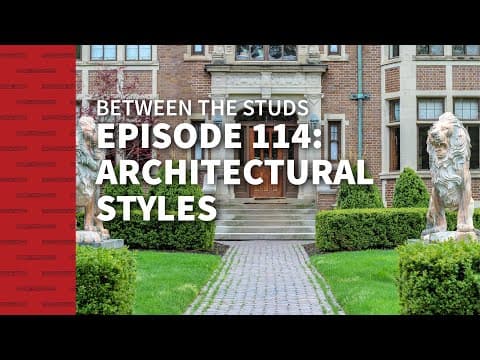
This blog post delves into various architectural styles, tracing their history and evolution while highlighting their characteristics and modern adaptations. From Colonial and Georgian to Modern and Prairie styles, the discussion emphasizes the eclectic nature of contemporary home design, showcasing how historical elements are integrated into today's architecture.
In this episode, we embark on an exploration of architectural styles, drawing from decades of experience in building homes. With over 8,000 homes constructed, we have witnessed a myriad of styles come and go, each with its unique charm and historical significance.
One of the most fascinating aspects of modern architecture is eclecticism, where builders incorporate the best elements from various styles into a single structure. This blending of styles allows for creativity and personalization in home design, making each home unique.
To kick off our discussion, we decided to take a drive through our local neighborhoods to gather inspiration from the beautiful homes around us. This hands-on approach allows us to appreciate the architectural diversity present in our area.
The Colonial style, which emerged in the late 1600s, became prominent in the United States by the early 1900s. Characterized by its symmetrical design, Colonial homes often feature:
Following the Colonial style, the Georgian style gained popularity in the 1700s and 1800s. Key features include:
As the United States developed its identity, architectural styles evolved to reflect this change. The Federal style emerged alongside the formation of the federal government, characterized by:
The Greek Revival style, which followed the Federal style, was inspired by ancient Greek architecture. Notable characteristics include:
Originating in Paris, the Beaux-Arts style is known for its grandeur and ornamentation. Key features include:
The Gothic style is often associated with churches and features:
Known for its brackets and ornamentation, the Italianate style includes:
The Tudor style is characterized by:
Emerging in the early 20th century, the Prairie style is known for:
The modern style is currently one of the fastest-growing trends in home construction, featuring:
As we reflect on the various architectural styles discussed, it is clear that modern home design continues to draw inspiration from the past. The eclectic nature of contemporary architecture allows for a rich tapestry of styles, ensuring that each home tells its own story. Whether you are drawn to the classic elegance of Colonial homes or the sleek lines of modern designs, there is something for everyone in the world of architecture.
As we continue to build and innovate, we invite you to explore these styles and consider how they can be incorporated into your own home.