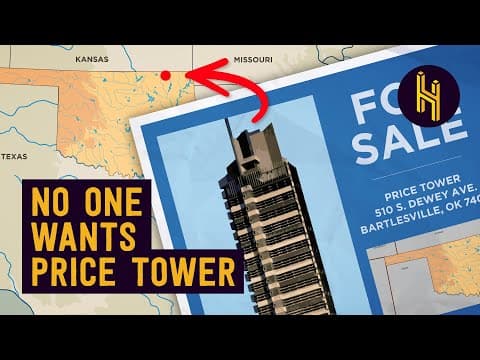
Frank Lloyd Wright's only skyscraper, Price Tower, located in Bartlesville, Oklahoma, has a tumultuous history marked by financial struggles and ownership changes, culminating in its sale for just $10 in 2023. This blog post explores the building's origins, its architectural significance, and the challenges faced by its caretakers over the decades.
Frank Lloyd Wright, one of America's most iconic architects, is known for his remarkable designs, yet he only completed one skyscraper in his entire career. This singular achievement, the Price Tower, is located in Bartlesville, Oklahoma. In 2023, this architectural marvel was sold for a mere $10, leading to a fascinating tale of ambition, financial woes, and the struggle to preserve a piece of history.
The story begins in the 1920s, a decade marked by economic prosperity and architectural ambition. Wright initially envisioned a four-tower apartment building for New York City, but the stock market crash of 1929 dashed those plans. This was not the first time Wright's skyscraper dreams had been thwarted; a proposed design for the National Life Insurance Company in Chicago also fell through. Despite these setbacks, Wright's vision for a skyscraper remained alive.
In Bartlesville, a small town with a population under 20,000, Harold C. Price, head of the HC Price Company, sought to build a new headquarters. Initially proposing a modest three-story building, Wright persuaded Price to expand the project into a 19-story tower, ultimately costing $2.1 million (approximately $25 million today). This building, completed in 1956, was a unique adaptation of Wright's earlier New York plans, featuring unconventional shapes and custom-designed furniture.
The Price Company occupied the tower until 1981, after which it was sold to Phillips Petroleum Company. However, the oil crisis of 1984 led to the building being used primarily for storage. In the late 1990s, the Price Tower Art Center, a nonprofit organization, took over the building, investing $4 million in renovations and transforming it into a cultural hub with a restaurant, museum, and boutique hotel. Despite these efforts, the nonprofit struggled financially, facing declining donations and increasing debts.
By 2023, the Price Tower Art Center was in dire straits, losing nearly $400,000 in 2019 alone. In a surprising turn of events, the nonprofit sold the building to a group of private investors led by Cynthia Blanchard for just $10. This deal, however, came with the burden of the nonprofit's debts and the promise of $10 million in preservation work, which proved to be overly ambitious.
Blanchard's vision included transforming the tower into a tech hub and launching new ventures, but financial difficulties quickly mounted. Loans fell through, and the promised renovations never materialized. By August 2024, the situation had deteriorated, leading to layoffs and the closure of the building.
As Copper Tree, the new owners, struggled to maintain the building, they faced legal challenges, including a lawsuit from the Frank Lloyd Wright Conservancy over the sale of custom furniture designed for the tower. In May 2024, McFarland Building Company, which had previously negotiated to buy the tower for $1.4 million, found the building listed for auction. The court ruled in favor of McFarland, mandating the sale to proceed and ensuring that the proceeds would go towards paying off the tower's debts and restoring utilities.
Ultimately, Copper Tree declared bankruptcy, leaving the future of Price Tower uncertain. The building, once a symbol of architectural innovation, now faced the risk of neglect and decay.
The saga of Price Tower is a poignant reminder of the challenges faced by historic buildings in a changing economic landscape. As McFarland Building Company takes over, there is hope that they will restore the tower to its former glory. The story of Price Tower illustrates the delicate balance between preservation and financial viability, raising questions about the future of unique architectural landmarks in less affluent areas.
In a world where cool things often survive only in wealthy cities, the fate of Price Tower remains a critical issue for both the local community and architectural enthusiasts alike.
As for the author, they humorously noted their own failed attempt to purchase the tower for $10, highlighting the absurdity of the situation. The hope is that someone will take good care of this architectural gem, ensuring it continues to inspire future generations.