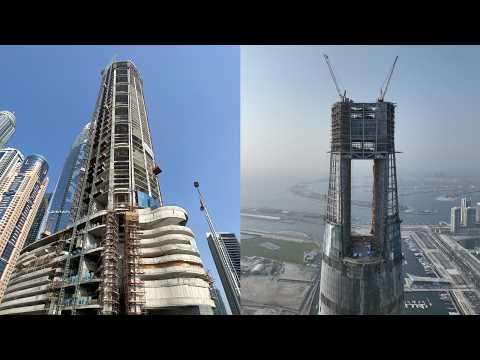
The Ciel Dubai Marina, standing at 365 meters, is the tallest hotel in the world, showcasing Dubai's architectural innovation and engineering prowess. This blog post explores the challenges and creative solutions involved in its construction, emphasizing the blend of strict regulations and imaginative design.
Dubai is a city synonymous with extravagance and architectural marvels. Among its latest additions to the skyline is the Ciel Dubai Marina, a towering structure that stands at 365 meters, making it the tallest hotel in the world. This achievement is not just another feather in Dubai's cap; it represents a significant feat of engineering and design that reflects the city's unique challenges and opportunities.
Contrary to popular belief, building in Dubai is not merely about having a blank check and a free hand. Yahya Jan, the president and design director of Norr, a firm responsible for many iconic buildings in Dubai, explains that the city has rigorous regulations governing construction. These regulations dictate setbacks, height, and floor area ratios, requiring a blend of creativity and analytical thinking to navigate.
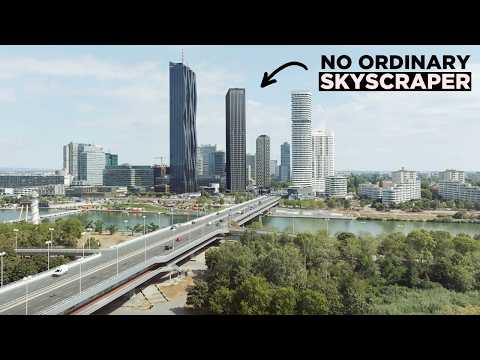
The Ciel Dubai Marina project began with a fundamental question: how to construct a 1,000-room hotel on a triangular plot of land squeezed between the Cayan Tower and the D94 road. This awkward site posed significant challenges, especially since it was previously marred by abandoned pile foundations from a canceled project. The design team had to creatively utilize these existing structures while adhering to strict guidelines.
The hotel boasts luxurious amenities, including an observation deck with panoramic views, four pools, and an infinity pool located on the 76th floor. However, the initial goal was not to create the tallest hotel but to maximize the use of the challenging site. The design evolved from a basic cuboid shape to a more complex form influenced by the surrounding environment.
One of the critical considerations in designing supertall buildings is wind resistance. At heights over 300 meters, wind becomes a significant structural concern. The Ciel Dubai Marina's design incorporates a tapered, oval shape that minimizes wind vortex shedding, allowing air to flow around the building more efficiently. This shape was the result of two years of experimentation and wind testing, leading to a design that balances aesthetics with functionality.
A standout feature of the Ciel Dubai Marina is the "eye of the needle," a cutout that serves dual purposes: it provides a viewing platform and allows wind to pass through the structure, reducing lateral forces. This innovative design element enhances the building's stability while offering guests breathtaking views of the Persian Gulf and the iconic Palm Jumeirah.
The construction of the Ciel Dubai Marina began with laying a robust foundation, including 21 new piles capped with a 12,000 square-meter raft foundation. To manage costs, the design team opted for concrete as the primary structural material, utilizing a single core design reinforced by radial buttresses. This approach not only provided stability but also allowed for the creation of expansive spaces within the hotel.
To further enhance wind resistance, the building's mechanical floors were reinforced with outrigger beams. These beams connect the radial walls to the core, providing additional rigidity against lateral forces. This structural integrity is crucial for maintaining stability in a building of this height.
The exterior of the Ciel Dubai Marina features a glass curtain wall, designed using a cold bending technique that allows for a slight curvature. This design choice was made to optimize wind deflection while maintaining an efficient production process. The result is a visually striking façade that complements the building's innovative shape.
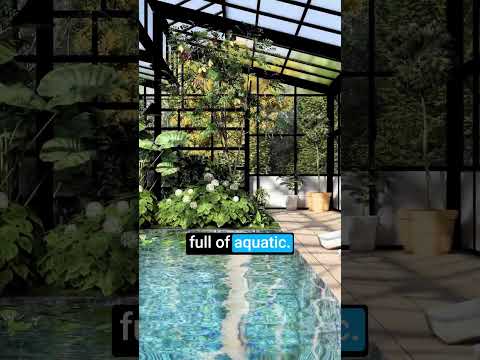
One of the most unique aspects of the Ciel Dubai Marina is its 12 atrium gardens, which create communal spaces within the hotel. These gardens are designed to regulate airflow naturally, enhancing cooling without relying heavily on air conditioning. This feature not only adds to the aesthetic appeal but also contributes to the building's energy efficiency.
Completed in 2024, the Ciel Dubai Marina is set to open as part of IHG’s Vignette Collection of hotels. While the engineering and design challenges were formidable, the end result is a luxurious destination that offers guests unparalleled experiences, including the world’s highest infinity pool and exquisite dining options. As Dubai continues to push the boundaries of architecture and engineering, the Ciel Dubai Marina stands as a testament to the city's innovative spirit and commitment to excellence in construction.