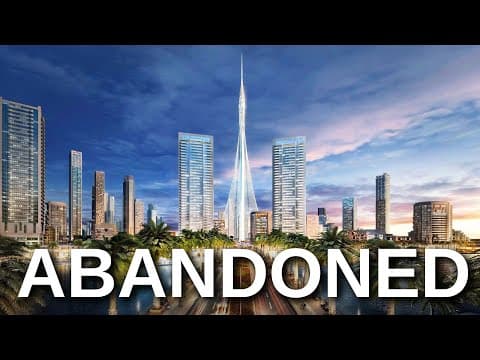
Dubai Creek Tower, once envisioned as the world's tallest structure, faced numerous setbacks leading to its abandonment. Initially part of the Lagoons project, it was rebranded and redesigned but ultimately stalled due to financial crises and changing priorities, leaving only a foundation in the desert.
Dubai has long been synonymous with excess and world records, particularly since the government shifted its economic focus from oil to tourism. This transformation has led to numerous mega projects that have defined the city’s skyline. Among these ambitious ventures was the Dubai Creek Tower, intended to be the tallest human-made structure in the world. However, after initial groundwork, the project was left abandoned. This blog post explores the journey of this much-hyped tower, from its inception to its current state of neglect.
The story of Dubai Creek Tower began in 2006, during a period of rapid development in Dubai. Developer Sama Dubai, a subsidiary of Dubai Holdings, announced an ambitious project called the Lagoons, located near the end of Dubai Creek and close to the international airport. The architectural firm TVS Architects was tasked with creating a master plan for this sprawling development, which encompassed over 1,600 acres and featured 70 mid-rise residential towers, shopping malls, museums, and an opera house.
The centerpiece of the Lagoons was to be the Dubai Towers, a series of four architecturally striking skyscrapers that would serve as icons for the development. Valued at approximately $8 billion, the project generated significant interest, with early residential sales selling out within months. However, the 2008 financial crisis halted progress, leaving the Lagoons project largely unrealized, with only a model and a presentation center to show for it.
In 2013, Dubai Holdings sought to revive the Lagoons project by partnering with Emaar Properties, a well-known developer responsible for the Burj Khalifa and Dubai Mall. The new plan involved a shift away from the original concept, focusing instead on a denser development known as Dubai Creek Harbor. Despite the Lagoons name remaining, the project underwent significant changes, and construction began on the residential district along Dubai Creek.
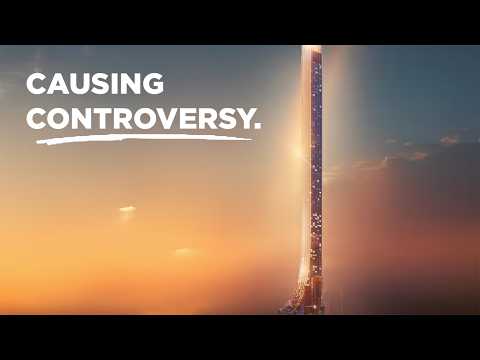
By 2016, the centerpiece of this new development was unveiled: the Dubai Creek Tower, designed by renowned architect Santiago Calatrava. The tower was envisioned to surpass the Burj Khalifa, with a height speculated to exceed 1,000 meters. The design featured a flowing, natural aesthetic inspired by a lily, with plans for restaurants, a luxury hotel, and observation decks.
The groundbreaking for the Dubai Creek Tower took place in October 2016, with developers optimistic about a quick rise from the sand. The design was less labor-intensive than traditional skyscrapers, and completion was projected for 2020, coinciding with the Dubai World Expo. By early 2018, the foundation work was largely completed, and the project was generating excitement.
However, as 2019 approached, the site began to show signs of stagnation. Infrastructure for construction crews was vacated, and by early 2020, reports indicated that the tower's construction was on pause. While the COVID-19 pandemic was cited as a reason for the delays, it was evident that issues had arisen long before.
As 2020 came and went, the Dubai Creek Tower remained an abandoned foundation in the desert. Emaar Properties revised their opening plans to 2022, but that date passed without any progress. The developers began to remove mentions of the tower from marketing materials, signaling a shift in focus away from this once-prominent project.
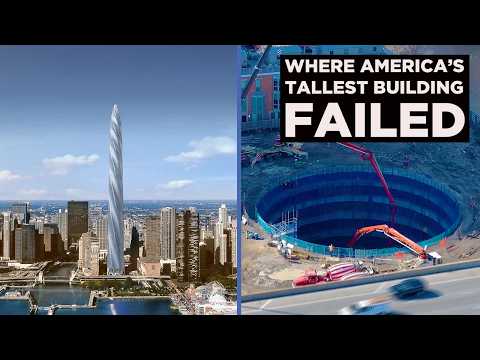
In August 2023, Emaar announced that the project was on indefinite hold, citing a redesign that would result in a structure shorter than the Burj Khalifa. They promised a new design would be revealed in the coming months, with construction slated to resume in 2024. However, as of now, the site remains unchanged, with only a large hole in the ground to show for years of ambition.
The saga of Dubai Creek Tower reflects the challenges of mega projects in a rapidly changing economic landscape. Initially conceived as a symbol of pride for Dubai, the tower has become a reminder of the pitfalls of overambition and the impact of financial crises. While the surrounding developments continue to thrive, the tower's foundation sits abandoned, a stark contrast to the vibrant city around it.
As we look at the site today, it serves as a testament to what could have been—a monumental structure that now exists only in the realm of speculation and dreams. Whether the Dubai Creek Tower will ever rise from its current state remains uncertain, but its story is a compelling chapter in the ongoing narrative of Dubai's architectural ambitions.