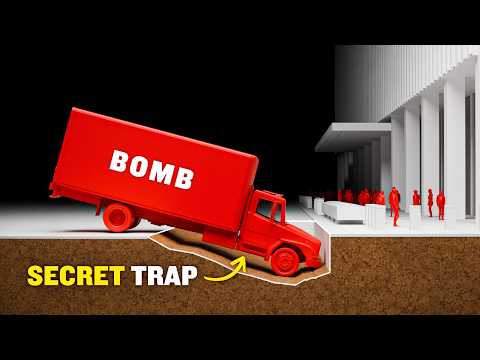
This blog post explores the bombproof design of the Dirkson Courthouse in Chicago, detailing the structural features that enhance its security against vehicle-borne improvised explosive devices (VBIEDs). It discusses the architectural strategies, security measures, and the impact of urban design on safety, while also examining the balance between accessibility and protection in urban environments.
The Dirkson Courthouse in Chicago serves as a critical example of modern bombproof building design. This post delves into the architectural features and security measures that protect this federal building from potential threats, particularly from vehicle-borne improvised explosive devices (VBIEDs).
On a typical day, the Dirkson Courthouse is bustling with activity. However, the threat of a VBIED looms large. A hypothetical scenario involves a semi-trailer loaded with 5,000 pounds of ammonium nitrate and diesel fuel, designed to create maximum destruction. This setup mirrors the infamous Oklahoma City bombing in 1995, but with modifications aimed at increasing its impact.
Positioned underground, the blast from such an explosion would target the building's eastern columns, which are arranged in a grid pattern. The design of the building includes core structures that prevent lateral movement, but an underground explosion could lead to catastrophic failure. The blast radius would cause severe damage within 60 meters, potentially leading to a progressive collapse of the structure.
Despite the potential threats, the Dirkson Courthouse was designed with certain features that inherently provide some level of protection against bomb attacks.
While the building has many protective features, certain aspects remain vulnerable. The loading docks, for instance, are critical access points that could be exploited during an attack.
In response to evolving threats, significant changes were made to the security protocols of federal buildings, including the Dirkson Courthouse, following the events of September 11, 2001.
The Federal Emergency Management Agency (FEMA) conducted extensive reviews of federal buildings and established guidelines to enhance security. The Dirkson Courthouse is classified as a level four building, indicating a high level of risk and necessitating stringent security measures.
The design of the Dirkson Courthouse also incorporates principles of Crime Prevention Through Environmental Design (CPTED). This approach aims to create a safe environment through thoughtful urban design.
The challenge of securing a building like the Dirkson Courthouse lies in balancing safety with the need for accessibility in an urban environment. While security measures are essential, they must not create a fortress-like atmosphere that deters public engagement.
The juxtaposition of safety and urban vibrancy is evident in the surrounding area. The federal government’s decision to purchase and secure nearby buildings after the bombing plot highlights the ongoing tension between urban development and security needs.
The Dirkson Courthouse exemplifies the complexities of modern bombproof building design. Through a combination of architectural features, enhanced security measures, and urban design principles, it stands as a testament to the ongoing efforts to protect public spaces from evolving threats. The balance between safety and accessibility remains a critical consideration for urban planners and architects alike, ensuring that buildings can serve their purpose while safeguarding the communities they inhabit.