The Chicago Spire, once envisioned as America's first megatall skyscraper, faced numerous setbacks leading to its abandonment. After years of stagnation, new plans for two smaller towers have emerged, marking a new chapter for the site.
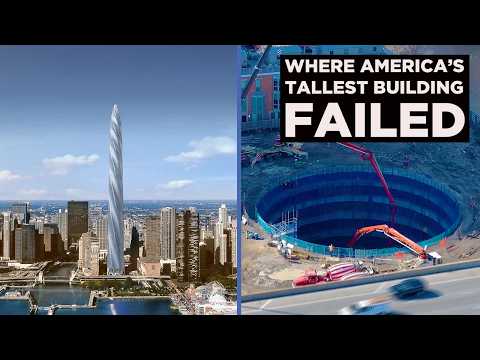
If you’ve traveled along Chicago’s famous Lake Shore Drive in recent years, you may have noticed a peculiar sight: a massive, gaping hole where a skyscraper was once planned. This pit, which has remained unchanged for over a decade, was intended to be the site of America’s first megatall skyscraper, designed by renowned architect Santiago Calatrava. However, after years of stagnation, the hole is finally being filled, and a new building is taking shape.
Chicago is often regarded as the birthplace of the skyscraper, and the city has a rich history of tall building rivalries. In 2005, as Donald Trump began construction on his International Hotel & Tower, plans were underway for another monumental structure that would surpass all existing buildings in height. The proposed skyscraper, initially named the Fordham Spire, was designed to reach 610 meters and feature 150 stories, making it the second tallest building in the world after the Burj Khalifa.
The Fordham Spire was to be a stunning architectural feat, characterized by its twisting form that gave the impression of movement. The design included a mix of luxury condos, a hotel, and a broadcast antenna. However, shortly after the project began, the original developer faced financial difficulties, leading to Garrett Kelleher of Shelbourne Development taking over the project. Kelleher renamed the building the Chicago Spire and shifted its focus solely to luxury apartments, with over 1,000 units planned.
By mid-2007, the project had received unanimous approval from city officials, and construction commenced. The foundation work involved creating a large round hole supported by caissons deep in the ground. However, the financial crisis of 2008 brought construction to a halt. The Great Recession severely impacted funding, and the project was left as a massive crater in one of Chicago's most valuable areas for over 15 years.
In 2014, Related Midwest acquired the site, signaling a shift in plans. Instead of reviving the Chicago Spire, they proposed two smaller skyscrapers: one reaching 335 meters with hotel rooms and condos, and another at 260 meters for rental apartments. The architectural firm Skidmore, Owings & Merrill (SOM), led by David Childs, was brought on board to design the new towers.
SOM's vision included two towers set apart at different angles, tapering from base to tip to create a new visual gateway to Chicago. The design aimed to minimize disruption to views from the west and incorporate elements inspired by the city’s architectural history. A new park was also planned to connect with Chicago’s Riverwalk, enhancing the community's landscape.
Despite the initial excitement, the project faced further delays. Alderman Brendan Reilly put the plans on hold, demanding significant revisions, including the removal of hotel rooms and adjustments to the podium between the towers. After extensive redesigns, the heights of the towers were modified, with the South Tower shrinking to 233 meters and the North Tower growing to 266 meters.
Approval for the revised plans came in 2020, but the onset of the COVID-19 pandemic further delayed progress. However, in 2024, groundbreaking finally commenced at 400 DuSable Lake Shore Drive, marking the start of construction for the first tower, which will include 635 rental apartments, with 20% designated as affordable housing.
The construction process involved overcoming various challenges related to the existing excavation. The team had to pump out approximately three million gallons of water and relocate utility lines before beginning the foundation work. They utilized the existing caissons from the original Spire project, which allowed for a more efficient construction process.
As construction progressed, the core of the new tower was built in the center of the hole, with surrounding material gradually backfilled. By April 2025, the construction team was pouring a new concrete floor every three days, and the project was moving forward at a rapid pace. The first occupants are expected to move in by 2027, while plans for the second tower will commence once the first is completed.
The Chicago Spire may not have come to fruition, but its remnants have paved the way for a new development that promises to enhance the city’s skyline. While some may lament the loss of the original vision, the new towers represent a practical and community-focused approach to urban development. Chicagoans will soon be able to admire a revitalized area that not only fills the long-standing eyesore but also contributes positively to the city’s architectural legacy.