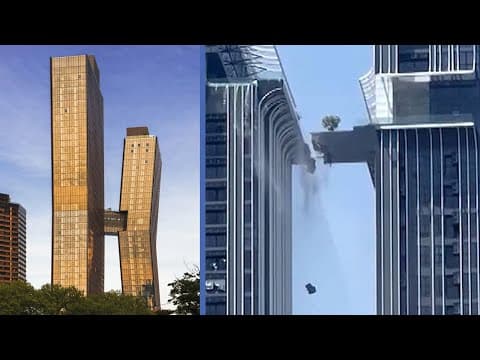
The American Copper Building in New York City showcases innovative architectural solutions to zoning challenges, featuring two leaning towers connected by a unique skybridge. This design not only maximizes limited space but also incorporates advanced engineering to ensure stability and resilience against environmental factors.
New York City is renowned for its skyline, boasting more skyscrapers than Beijing, Seoul, and Toronto combined. Only Shenzhen and Hong Kong surpass the Big Apple in this regard. As Manhattan becomes increasingly saturated with towering structures, developers face unique challenges in creating new buildings. The American Copper Building stands out as a remarkable example of innovative architecture that addresses these challenges head-on.
With land prices averaging $2,580 per square foot, Manhattan is one of the most expensive places to develop real estate. This high cost necessitates maximizing every inch of available land. The American Copper Building was constructed on a site that included protected parkland and an existing building, leaving only two narrow plots for development. Instead of building two separate skyscrapers, the developers opted for a single structure that creatively bends the two towers together in the middle, resulting in a unique architectural design.
Zoning laws in New York City, established to manage the density of buildings and ensure adequate light and air quality, play a crucial role in the development process. The city's first comprehensive zoning resolution was enacted in 1916, and the current regulations, introduced in 1961, dictate what can be built and where. These laws require developers to navigate complex regulations, which can be both costly and time-consuming.
For the American Copper Building, the site was previously a power plant, and the developers faced the challenge of adhering to zoning regulations while maximizing the use of the limited space available. The architects, led by Greg Pascarelli of SHoP Architects, were tasked with finding a creative solution that would allow for the construction of a single tower with shared amenities.
The solution was to connect the two towers with a skybridge, creating a single cohesive structure. This design not only allowed for the efficient use of space but also presented significant engineering challenges. The skybridge, which moves independently of the towers, is a unique feature that had not been attempted in New York for decades.
The skybridge connects the two towers at a point where they lean towards each other, creating a parallelogram shape that accommodates the bending of the buildings. Each tower tilts in opposite directions, with the east tower leaning more significantly than the west. This design creates a visually striking silhouette while also ensuring structural integrity.
To address the potential for differential movement between the two towers, the skybridge is only anchored to one tower, allowing it to slide on teflon plates. This innovative solution prevents the bridge from being damaged if the towers sway differently during high winds or seismic activity.
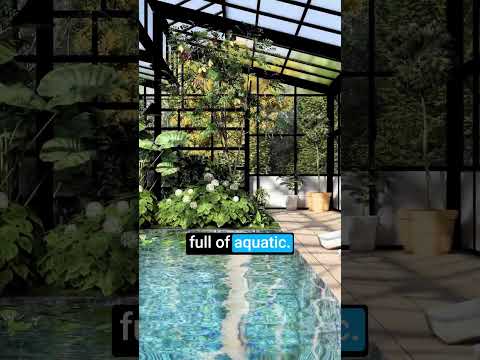
The construction of the American Copper Building was a meticulous process. A temporary bridge was initially constructed to facilitate the movement of materials, and each piece of the skybridge was prefabricated for strength and durability. The building's design also incorporates shared amenities, including a swimming pool located within the skybridge, providing a unique experience for residents.
Given the building's proximity to the East River, flood prevention was a critical consideration. The construction team created a concrete perimeter wall to prevent water from entering the site, effectively creating a "bathtub" that allowed for safe excavation and foundation work. This process took over a year and involved pumping out millions of gallons of water daily.
The exterior of the American Copper Building features over 4.25 million pounds of raw copper, making it the first skyscraper in New York to utilize a copper facade. This choice was both aesthetic and functional, as copper is resistant to corrosion and requires minimal maintenance. Over time, the copper will develop a natural patina, transitioning from a reddish hue to a greenish tone, similar to the Statue of Liberty.
The American Copper Building has reintroduced the concept of skybridges to New York City, marking a renaissance in architectural design. As urban areas continue to densify, innovative structures like this one can enhance connectivity and functionality within the city. The successful completion of the American Copper Building demonstrates the potential for creative solutions in overcoming the challenges of urban development, paving the way for future architectural endeavors in New York and beyond.