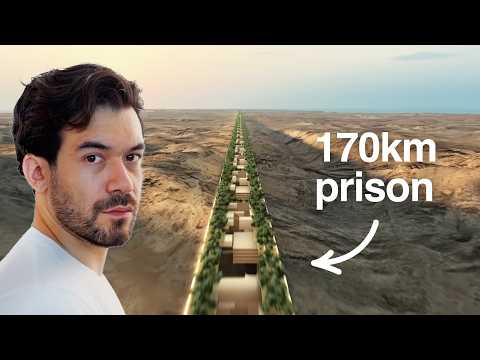
Saudi Arabia's ambitious project, The Line, aims to create a 170 km linear city for 9 million people, challenging traditional urban design. This blog explores its potential benefits and drawbacks, including sustainability, urban density, and the impact of AI on future living.
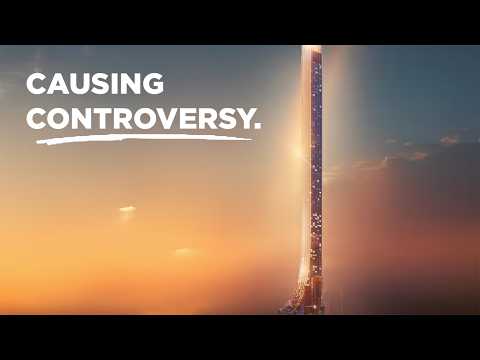
Something strange is emerging in the Saudi desert—a perfect 170 km line cutting through the sand, visible from space. This ambitious project, known as The Line, is part of a larger $8 trillion mega structure being developed by the Saudi Kingdom, designed to accommodate 9 million residents. As we delve into this futuristic vision, we will explore the motivations behind its construction, the implications for urban living, and what this means for the future of our cities.
To put The Line into perspective, consider Taipei 101, the former tallest building in the world, which stands at 508 meters tall and 60 meters wide. The Line is only 8 meters shorter but is over three times as wide, stretching for 170 km. This distance is equivalent to building nearly 8,500 Taipei 101s in a desert with no existing infrastructure, making it almost eight times the length of Manhattan.
When Taipei 101 was completed in 2004, it redefined architectural possibilities, housing offices, shops, and an observatory in a seismic zone. The Line, however, was initially estimated to cost $500 billion, a figure that has since ballooned to as much as $8.8 trillion by 2080. This makes it the most expensive construction project in human history, raising questions about its feasibility and the motivations behind such an undertaking.
Saudi Arabia faces a pressing deadline: fossil fuel demand is expected to decline after 2030. As one of the world's largest oil producers, the country needs to redefine its identity quickly. The Line is part of a broader strategy to transition from an oil-dependent economy to a global hub for tourism, technology, and services. Positioned strategically at the crossroads of Asia, Africa, and Europe, this project aims to create a new urban environment powered by AI.
The motivation behind The Line is not merely to be different; it stems from the belief that traditional cities are flawed. Cities have historically evolved like living organisms, sprawling outward and creating traffic congestion, pollution, and wasted time. Saudi Arabia's solution is to shrink the city, stack it vertically, and create a walkable environment.
This concept aligns with the idea of the 15-minute city, popularized by urbanist Carlos Moreno, where all essential services are accessible within a 15-minute walk or transit trip. Cities like Amsterdam and Barcelona exemplify this model, contrasting sharply with car-dependent cities like Los Angeles. The Line aims to surpass this model by increasing density and reducing reliance on cars through a high-speed rail system.
The Line proposes to compress the entire population of London into a 34 km area, making it nearly ten times denser than Manhattan. However, this density raises significant challenges for urban transit. While the marketing material promises travel across the 170 km in just 20 minutes, the reality of urban transit involves waiting, stopping, and transferring, which could extend travel times significantly.
With approximately 113 stops along the route, travel times could realistically range from 57 to 133 minutes, far exceeding the promised efficiency. This discrepancy highlights the potential pitfalls of such an ambitious project.
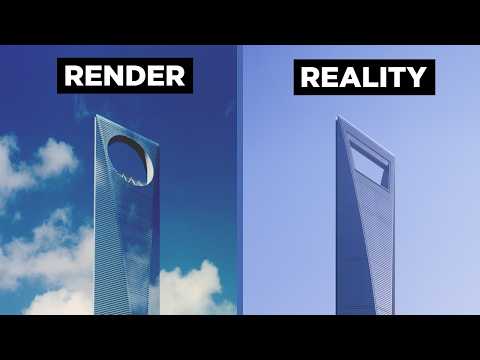
To understand how The Line might function, we can look at the Shanghai Tower, which employs a stacked zoning system to facilitate vertical navigation. Residents could move to their district's sky lobby and then transfer to smaller shuttles within their zone. This model offers a glimpse into how The Line could operate, but it also raises questions about the feasibility of such a tightly interlocked system.
The Line's design presents unique environmental challenges. With temperatures in the region often exceeding 100°F, maintaining a comfortable climate within the structure is crucial. A double-walled glazing system may be employed to keep the interior cool, but this raises concerns about natural light access for lower levels, potentially creating a hierarchy of desirability within the city.
Moreover, the mirrored glass facade poses risks to wildlife, particularly migratory birds, which could be severely impacted by the reflective surfaces. The ecological consequences of such a massive structure must be carefully considered, as they could undermine the project's sustainability claims.
While The Line is marketed as a revolutionary act of environmental responsibility, the carbon footprint of constructing such a massive structure is staggering. The energy demands for cooling and servicing 9 million residents could exceed the annual carbon emissions of entire countries. This raises critical questions about the project's true sustainability and its impact on local ecosystems.
The Line reflects a broader trend in architecture, where mega structures serve as symbols of national ambition and identity. Similar to the Egyptian pyramids and royal palaces, The Line aims to project a vision of progress and relevance. However, this top-down approach risks erasing the organic, layered nature of cities that fosters cultural identity and community.
Cities like Tokyo and Istanbul thrive on their imperfections and the memories embedded in their streets. In contrast, The Line's sterile, optimized design may lack the vibrancy and unpredictability that make urban spaces feel alive.
The Line represents a bold vision for the future of urban living, but it also serves as a cautionary tale about the dangers of prioritizing efficiency and control over the messy, organic nature of human life. As Saudi Arabia attempts to leap into a new era, it risks trading the richness of lived experience for a perfect illusion of progress.
In the end, The Line is not just a story about architecture; it is a reflection of our collective aspirations and the choices we make about the cities we inhabit. As we move forward, we must consider how to balance innovation with the need for community, history, and the unpredictable beauty of urban life.