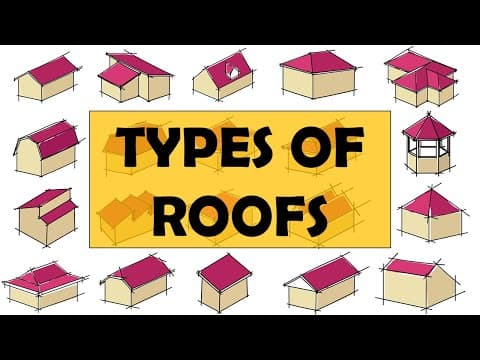
This article provides an overview of the 20 most common types of roofs, detailing their unique characteristics, advantages, and aesthetic appeal, helping readers understand the differences and applications of each roofing style.
Roofs are an essential part of any building, providing protection and contributing to the overall aesthetic. In this article, we will explore the 20 most common types of roofs, detailing their unique characteristics and applications. By the end, you will be able to differentiate among these roofing styles with ease.
Gable roofs, also known as peaked or pitched roofs, are among the most common types seen in homes worldwide. They are easily recognized by their standard triangular or inverted V shape, which allows for efficient water drainage and provides a classic look.
Similar to a regular gable roof, the box gable roof features triangular extensions that are closed off, giving it a more pronounced triangular shape. This design enhances the roof's aesthetic appeal while maintaining the benefits of a gable roof.
A dormer roof is not a separate type of roof but refers to the roof covering a dormer, which is a windowed structure that projects vertically from a sloping roof. Dormers are used to create more usable space in attics, making them brighter and more accessible.
Unlike gable roofs, hip roofs have slopes on all four sides, which meet at the top to form a ridge. This design provides greater structural stability and is often preferred in areas with high winds or heavy snowfall.
This roofing type combines both hips and valleys, creating a visually appealing structure with numerous dips and peaks. It is commonly found in residential properties in the U.S. due to its aesthetic benefits compared to simpler roof shapes.
The gambrel roof resembles a gable roof but features an additional slope on its lower edges. The lower slope has a steeper pitch, while the upper side is gentler, providing extra space in the attic and a distinctive look.
Similar to the gambrel roof, the mansard roof has two different slopes on each side, but it features four sides instead of two. The lower slope is much steeper than the upper, allowing for more usable attic space and a unique architectural style.
The butterfly roof consists of two tandem pieces that meet in the middle, forming a V shape. This design resembles a butterfly's wings in flight and is often used in modern and contemporary homes for its striking appearance.
A combination of hip and gable roofs, the Dutch gable roof features a hip roof as a base with a smaller gable roof sitting on top. This design offers the benefits of both styles, providing aesthetic appeal and functional space.
Hexagonal roofs have six sides that slope downward, primarily designed for aesthetic purposes rather than practicality. They are commonly seen in pavilion structures like gazebos, adding a unique visual element.
The jerkinhead roof is a hybrid of gable and hip roofs. It features large gables topped with a flattened clipped edge, similar to a hip roof, creating a distinctive silhouette.
A clerestory roof has two sloping sides joined by a short vertical wall, with the peak located near the middle. This design allows for ample natural light to enter the space below, enhancing the interior environment.
Composed of a series of ridges with double pitches on each side, sawtooth roofs resemble a saw blade. They often feature windows in the vertical spaces, allowing natural light to flood the interior.
Despite their name, flat roofs are not entirely flat; they have a slight incline to prevent water accumulation. Defined by the National Roofing Contractor Association, a flat roof has a slope of 3:12 or less.
An A-frame roof is essentially a double gable roof, characterized by two sloped sides that meet at the center, forming an M shape. This design is popular in cabins and homes in snowy regions due to its effective snow shedding capabilities.
The salt box roof features two slopes of varying lengths, with one side significantly longer than the other. This design resembles a gable roof but offers a unique profile that adds character to the building.
Shed roofs have a single slope that inclines at a specific angle. This roofing type is common in contemporary homes, providing more interior space while maintaining a simple and sophisticated appearance.
Similar to shed roofs, skillion roofs feature a single flat surface with a steep pitch. They can come in various planes, such as the butterfly roof, which is an inverted V shape.
As the name suggests, pyramid roofs take the shape of a pyramid and are constructed on a square or rectangular base. They feature four triangular sides that converge at a single point, eliminating the ridge found in standard hip roofs.
Understanding the different types of roofs is essential for anyone involved in architecture, construction, or home design. Each roofing style offers unique benefits and aesthetic qualities, allowing homeowners and builders to choose the best option for their needs. Whether you prefer the classic look of a gable roof or the modern appeal of a butterfly roof, there is a roofing style to suit every taste and requirement.