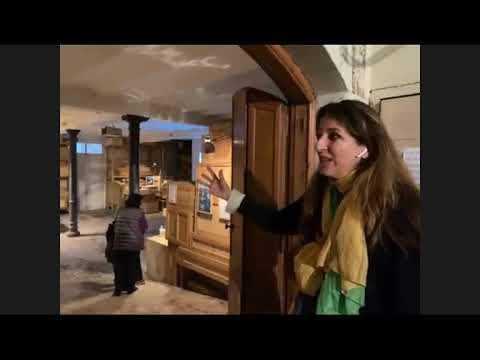
Benedetta Tagliabue, a renowned architect, shares insights into her firm's experimental approach to design, emphasizing materiality, context, and the healing power of architecture. Through a virtual tour of her Barcelona office, she discusses notable projects, including the Scottish Parliament and the Spanish Pavilion at the 2010 Shanghai World Expo, while highlighting the importance of texture and human scale in urban environments.
Benedetta Tagliabue is a prominent figure in interior and industrial design, known for her experimental approach to form and materials. Her Barcelona-based firm has gained respect in the architectural community for its diverse and complex works. This blog post delves into her architectural philosophy, notable projects, and the impact of her work on contemporary architecture.
Tagliabue's designs engage with their context while maintaining a spirit of experimentation. Her philosophy is characterized by continuous curiosity, material experimentation, and complex spatiality. This approach has led to the creation of significant projects that resonate with their surroundings and serve their communities.
Among the most notable projects by Tagliabue's firm are:
Tagliabue emphasizes the significance of materiality in architecture. During a visit to her office, students observed the rigorous process of physical model building, which included exquisite wood models and full-scale prototypes. The use of materials such as woven reed panels for the Shanghai Pavilion showcases her dedication to exploring the constructability and durability of materials.
Tagliabue's work often investigates texture and textile architecture. She believes that introducing new materials can lead to lighter, more durable architecture that enhances the tactile experience of spaces. This exploration is evident in her recent projects, where she aims to create environments that foster a connection with nature and promote well-being.
Tagliabue's designs are deeply rooted in their context. She believes that architecture should respond to its surroundings and contribute positively to the environment. For instance, her recent project in Barcelona, the Maggie Center, is designed to provide a healing space for cancer patients, reflecting the original vision of the hospital it adjoins.
The Maggie Center is a testament to Tagliabue's belief in the healing power of architecture. The design integrates natural elements and creates a welcoming atmosphere, allowing patients to feel at home rather than in a clinical environment. The building's layout encourages social interaction while providing private spaces for reflection and relaxation.
Tagliabue's commitment to education is evident in her role as a visiting professor at prestigious institutions such as Harvard and Columbia. She actively engages with students, sharing her experiences and insights into the architectural process. Her firm also hosts lectures and exhibitions to promote the legacy of her late partner, Enrique Miralles, fostering a culture of inquiry and experimentation.
Benedetta Tagliabue's architectural philosophy is a blend of innovation, context, and materiality. Her work not only transforms urban landscapes but also enhances the human experience within those spaces. Through her commitment to education and community engagement, she inspires the next generation of architects to explore the potential of architecture to heal and connect people with their environment. As we look to the future, Tagliabue's approach serves as a guiding light for creating meaningful and impactful architecture.