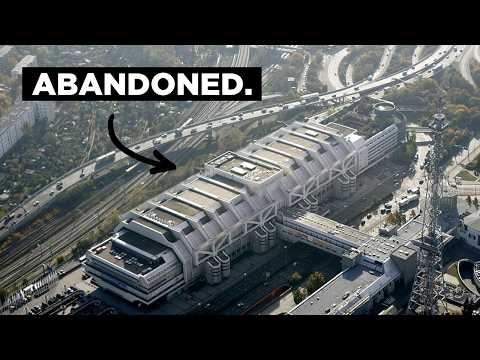
The International Conference Center (ICC) in Berlin, known as the 'spaceship', symbolizes the architectural rivalry of the Cold War era. Despite its initial grandeur and innovative design, it has been abandoned since 2014. A new competition aims to revitalize this iconic structure, reflecting Berlin's modern spirit and commitment to innovation.
In the heart of Berlin lies one of the largest abandoned buildings in Europe, the International Conference Center (ICC), often referred to as the 'spaceship'. Constructed at a staggering cost of over a billion dollars, this architectural marvel was designed to host thousands of people but now stands empty, a relic of a bygone era. This blog post delves into the history, architectural significance, and future prospects of this iconic structure.
The ICC's story begins in 1979, during the height of the Cold War when Berlin was a city divided both physically and ideologically. The Berlin Wall, erected in 1961, became a potent symbol of this division, separating families and communities. East Berlin, under Communist control, prioritized grand structures to showcase governmental strength, while West Berlin responded with modernist architecture symbolizing progress and democracy.
In response to the East's Palace of the Republic, West Berlin proposed the ICC as a statement of capitalist superiority. Designed by architects Ralph Schuler and Urina Schulerwitz, the ICC was envisioned as a futuristic, high-tech structure that would serve as the largest convention center in the world. Construction began in 1973 and was completed in 1979, costing approximately 900 million Deutsche Marks, making it the most expensive building in West Berlin since World War II.
The ICC is a striking blend of brutalism and high-tech architecture, characterized by exposed steel beams, sharp angles, and a machine-like aesthetic. The building is not just a single structure; it features a unique design where an inner building is suspended within an outer shell, creating a 'building within a building' effect. This innovative approach was aimed at soundproofing and vibration isolation, essential given the busy roads surrounding the site.
Upon entering the ICC, visitors are greeted by a 1970s techno-optimism ambiance. The main hall can accommodate 5,000 people and is notable for its ability to be expanded further. The interior features a complex lighting system designed by artist Frank Erring, which helps navigate the maze-like structure. The building's design draws inspiration from popular culture, with elements reminiscent of science fiction, including lecture halls modeled after Star Trek.
Despite its initial acclaim, the ICC struggled to maintain its original purpose due to its sheer size and operational costs. It was effectively closed in 2014 and has since been used for various temporary purposes, including refugee accommodation and art exhibitions. The building's future was uncertain, with discussions about demolition and redevelopment, but public opposition highlighted its cultural significance.
In a bid to breathe new life into the ICC, the Berlin city government has launched a competition inviting investors and architects to propose innovative concepts for the building's future. The winning proposal will allow the selected team to rent the ICC for free for 99 years, provided they remodel it for public use. This initiative reflects Berlin's commitment to innovation and public engagement.
The public's affection for the ICC remains strong, as evidenced by the sold-out art exhibitions and the rapid ticket sales for open heritage days. Berlin, now a hub of innovation and entrepreneurship, hopes to revitalize this architectural landmark, aligning it with the city's modern identity.
The International Conference Center stands as a testament to Berlin's complex history and architectural evolution. As the city embarks on a journey to rejuvenate this abandoned mega-building, it symbolizes not only the past but also the potential for a vibrant future. The ICC's revival could mark a new chapter in Berlin's story, blending its rich history with contemporary innovation.