The Pantheon, one of the best-preserved ancient Roman monuments, showcases a complex history through its architecture and design. Originally a temple, it has transformed over centuries while maintaining its grandeur. The building's innovative use of concrete, its geometric perfection, and the dynamic interplay of light through the oculus highlight its architectural significance and influence on later styles.
The Pantheon stands as a testament to the ingenuity and artistry of ancient Roman architecture. Located in the heart of Rome, this monument is not only the best-preserved ancient structure but also a symbol of the city's rich history. In this post, we will delve into the architectural features, historical significance, and enduring influence of the Pantheon.
The Pantheon has undergone a remarkable transformation throughout its existence. Originally built as a temple dedicated to the gods, it was later consecrated as a church, which helped preserve it through the ages. Today, it serves as a major tourist attraction, drawing millions who come to admire its grandeur.
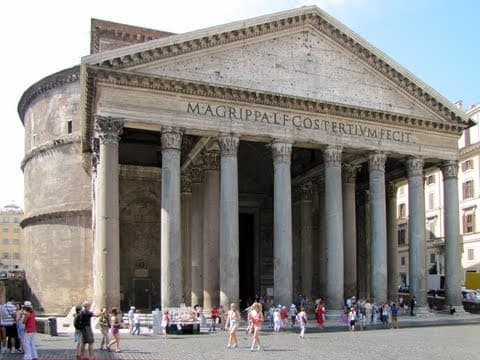
As we stand in the piazza in front of the Pantheon, we notice the weathering of its surface, which tells the story of its long history. The numerous holes in the pediment and the absence of original bronze fittings reveal the various purposes the building has served over time.
Approaching the Pantheon, visitors would have originally encountered a colonnade that framed the entrance, obscuring the building's cylindrical shape. The massive columns, made from single pieces of stone and imported from Egypt, rise unarticulated, showcasing the power of Rome under Emperor Hadrian, who commissioned the building.
Upon entering, one is greeted by a vast circular space that fills the field of vision. Unlike traditional basilicas, the Pantheon is a radial structure, with its central point located midway between the floor and the ceiling. This design allows for a perfect sphere to fit within the dome, emphasizing the building's geometric perfection.
The dome of the Pantheon is a marvel of engineering, constructed from thick concrete that supports its weight. The oculus at the center of the dome serves as the sole source of natural light, creating a dynamic interplay of light and shadow within the space. As sunlight moves across the interior, it projects a sharp circle on the floor, effectively turning the building into a sundial that reflects the movement of the heavens.
The Romans perfected the use of concrete, allowing for vast, uninterrupted spaces that traditional post-and-lintel architecture could not achieve. This innovation in construction enabled the Pantheon to shape space in a way that was revolutionary for its time, providing a sense of freedom and openness to those who enter.
The interior of the Pantheon was originally adorned with sculptures of gods and deified emperors, symbolizing the connection between the earthly and the divine. The rich surface of the building, with its colored marbles sourced from across the Roman Empire, reflects the wealth and power of Emperor Hadrian.
The Pantheon has left an indelible mark on architecture throughout history. Its design has been admired and replicated during the Renaissance and continues to influence modern architecture. The dome, particularly the oculus, has inspired countless buildings, including the National Gallery in Washington and various neoclassical structures across Europe and North America.
The Pantheon is not just an ancient monument; it is a symbol of architectural innovation and a reflection of the cultural and political power of Rome. Its enduring legacy can be seen in the many structures that have drawn inspiration from its design. As we pay homage to this magnificent building, we are reminded of the brilliance of Roman engineering and the timeless beauty of its architecture.