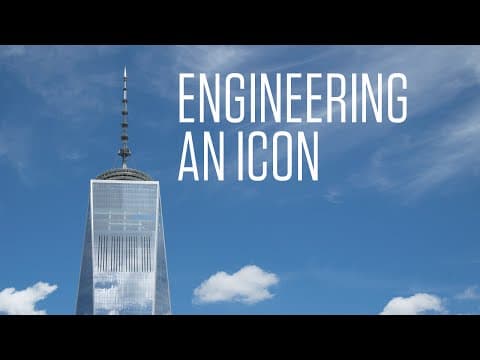
The construction of One World Trade Center symbolizes resilience and innovation in architecture, blending safety, beauty, and public accessibility while honoring the memory of the original Twin Towers.
The tragic events of September 11, 2001, left a profound impact on New York City and the world. The loss of the Twin Towers was described by many as putting a hole in our heart, igniting a collective desire to rebuild and restore hope. This blog post explores the engineering challenges and triumphs behind One World Trade Center, a symbol of resilience and innovation.
In the aftermath of 9/11, there was a strong public outcry to replace the lost buildings. The government recognized that the replacement should reflect the will of the people. This monumental task came with immense pressure and self-doubt among the engineering and construction communities. The challenge was not only to design a building that was special but also to ensure it adhered to best practices in safety and design.
Designing a super tall building is inherently complex, and One World Trade Center faced unique challenges. The team had to consider why previous structures were vulnerable and how to improve future designs. They realized that existing building codes were insufficient and took the initiative to design a structure that would meet future standards, even before they were officially written.
The engineers had to strike a balance between innovation and practicality. They aimed to avoid overly conservative designs that could dramatically increase costs while still addressing safety concerns. The confidence among the team members allowed them to make informed decisions that ultimately aligned with future code developments.
The architectural vision for One World Trade Center emphasized simplicity and geometry. The design aimed to create a clean, strong, and monumental structure. Notably, the height of the building matches that of the original Twin Towers, serving as a poignant reminder of the past. The geometry of the building, including its tilting walls, contributes to its striking appearance.
One of the critical safety features of One World Trade Center is its robust concrete core, which provides stiffness to the slender structure. This core houses all safety and security services, ensuring that the building is equipped to handle emergencies effectively. The use of high-strength concrete, significantly stronger than typical materials, was a groundbreaking decision that enhanced the building's resilience.
The construction of One World Trade Center involved an extraordinary 85-foot deep foundation, which was a significant engineering feat. Once the steel structure emerged above ground, it marked a turning point for everyone involved in the project. The visibility of the building provided a sense of relief and hope for the future.
One World Trade Center is designed to be a democratic space, allowing everyone to access the observation deck and experience the views of New York City. Visitors are often left in awe as they approach the building, captivated by its grandeur and the breathtaking vistas it offers.
The building has become a catalyst for revitalization in Lower Manhattan, attracting people to the area and fostering a vibrant community. The design encourages public engagement, with parks and spaces for people to gather and enjoy the environment.
For many, including those involved in its construction, One World Trade Center represents more than just a building; it symbolizes healing and a hopeful future. The tower stands as a testament to resilience, embodying the spirit of New Yorkers who refuse to be defined by tragedy.
One World Trade Center is not just the tallest building in the Western Hemisphere; it is a beacon of strength, beauty, and humility. It reflects the journey of a city that has faced adversity and emerged stronger. Every time the sun rises and illuminates the tower, it serves as a reminder of hope and pride for all who call New York home.