La Rotonda, designed by Andrea Palladio, is a quintessential example of Renaissance architecture that harmoniously blends classical and modern styles. This villa not only showcases Palladio's innovative design principles but also his influence on architecture in both Europe and America, earning him the title of the father of American architecture.
Today, we delve into the story of La Rotonda, a villa designed by one of the most influential architects of the modern era, Andrea Palladio. This iconic structure has become one of the most recognizable buildings of the Renaissance, and in this post, we will explore its unique features and the reasons behind its architectural significance.
La Rotonda, also known as Villa Almerico Capra, is an essential part of the UNESCO World Heritage site in the city of Vicenza, located in the Veneto region of Northern Italy. This region is renowned not only for its picturesque landscapes but also for its rich architectural history, particularly during the Renaissance period. Palladio, who was active nearly five centuries ago, is celebrated for revolutionizing architecture, earning him the title of the father of American architecture by the 111th Congress of the United States in 2010.
In 1566, Palladio was commissioned by Paolo Almerico, a prelate returning to Vicenza after a career in the Vatican, to design a villa where he could retire. This project posed a unique challenge for Palladio, as he needed to integrate the functional requirements of a working farm with the aesthetic demands of a beautiful residence. His ability to blend these needs while ensuring that the villa harmonized with its environment is a testament to his architectural genius.
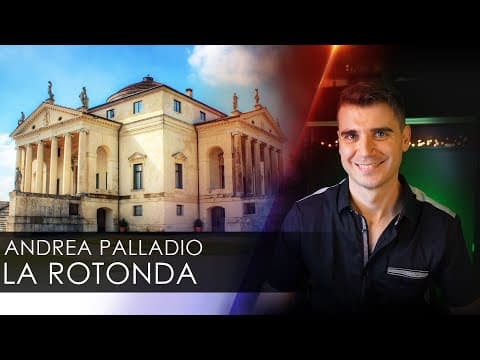
La Rotonda is characterized by its symmetrical design and classical temple-like facade. The villa features a square plan with four facades, each adorned with a projecting portico supported by six Ionic columns and topped with pediments. The central circular hall, which gives the villa its name, is crowned by a dome that draws inspiration from the Pantheon in Rome.
Upon entering La Rotonda, visitors are greeted not by a grand hall, as one might expect, but by four distinct salons, each uniquely decorated with frescoes. This design choice creates an element of surprise, as each entry into the villa offers a different experience. The central hall, richly adorned with marble and vibrant trompe-l'œil frescoes, contrasts sharply with the villa's sober exterior, reflecting a blend of Christian and classical themes.
Palladio's design principles were rooted in mathematical precision, as outlined in his treatise, "I Quattro Libri dell'Architettura." He oriented the villa at a 45-degree angle to the cardinal points, ensuring that each room received ample sunlight. This approach exemplifies the Renaissance humanist values that emphasized the interplay of science, mathematics, and nature in art and architecture.
Although Palladio passed away in 1580 before La Rotonda was completed, his vision was realized by Vincenzo Scamozzi, who was hired by the Capra family to finish the project. Scamozzi preserved much of Palladio's original design, which is evident in the villa's harmonious integration with its landscape. The subtle variations in the facades, such as the width of steps and retaining walls, further demonstrate Palladio's commitment to creating a structure that complements its surroundings.
Palladio's influence extends far beyond Italy; his architectural principles have shaped the designs of numerous buildings in the United States, including Thomas Jefferson's Monticello and the White House. His legacy as a pioneer of architectural harmony continues to inspire architects today.
Andrea Palladio's La Rotonda stands as a monumental achievement in Renaissance architecture, showcasing the seamless blend of functionality and beauty. Its design principles not only reflect the needs of its time but also offer timeless lessons on the importance of considering human needs and the natural environment in architectural practice. La Rotonda remains a testament to Palladio's enduring influence on architecture around the world.