The Burj Khalifa, completed in 2009, remains the tallest building in the world, standing at 829 meters. Its innovative design and engineering have set a high bar for future skyscrapers, with challenges in construction, economics, and human factors making it difficult to surpass. While projects like the Jeddah Tower and Dubai Creek Tower aim to exceed its height, they face significant hurdles. The future of skyscrapers may depend on new materials and technologies, but for now, the Burj Khalifa stands unchallenged.
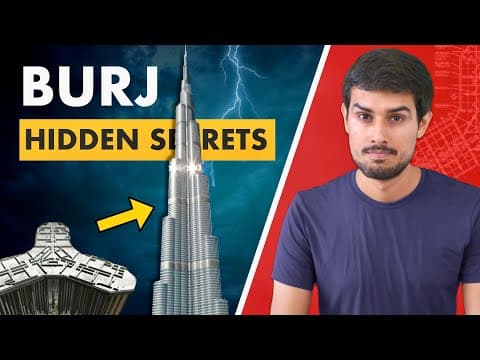
On January 6, 2004, construction began on what would become the tallest building in the world, the Burj Khalifa in Dubai. At the time, the tallest building was Taipei 101, standing at just over 500 meters. The ambitious goal set for the Burj Khalifa was to reach a staggering height of 829 meters, making it 62% taller than its nearest competitor. This monumental project took approximately 5.5 years to complete, officially finishing on October 1, 2009, and has since left the world in awe.
Historically, the tallest structures built by humans have evolved significantly. For about 4,000 years, the Great Pyramid of Giza, built around 2500 BC, held the record at 145 meters. This record was only surpassed in the 1300s with the construction of a cathedral in England, which reached approximately 160 meters. The competition for height continued with various churches until the Eiffel Tower was completed in 1889. However, the Eiffel Tower was not a habitable building.
The first skyscraper, the Home Insurance Building in Chicago, was completed in 1884 at 55 meters. This marked a turning point in architectural history, as buildings began to be designed for human occupancy rather than for monarchs or deities. The race for taller buildings primarily took place in New York and Chicago, driven by economic growth and urbanization.
The Burj Khalifa's height of 829 meters was a significant leap from previous records. Initially, its proposed height was around 550 meters, but as the project progressed, the desire to surpass existing records led to its final height. The Burj Khalifa was designed to be the centerpiece of Dubai's downtown area, which aimed to transform the city from a fishing village into an international tourism and economic hub.
The construction of the Burj Khalifa involved over 12,000 workers from more than 100 nationalities, totaling 22 million man-hours and costing approximately $1.5 billion. The building's success has indeed helped Dubai become a global tourist destination and economic center.
The Burj Khalifa's height presents unique challenges, particularly in terms of structural integrity and safety. The building's design features a Y-shaped structure supported by a hexagonal core, known as the Buttressed Core system, which was crucial in managing wind forces and supporting the building's weight. This innovative design was first used in South Korea's Tower Palace 3 and allowed the Burj Khalifa to withstand strong winds at its height.
Additionally, the foundation of the Burj Khalifa consists of 192 concrete and steel columns extending 50 meters into the ground. The construction required the use of the world's largest concrete pumps to deliver concrete to the top of the building. The exterior features over 100,000 square meters of glass and serves as the world's largest LED screen, capable of displaying light shows and videos.
In case of emergencies, the Burj Khalifa includes pressurized refuge areas every 25 floors and fire-proof staircases to limit the spread of fire. These safety features are essential for a building of such height, where evacuation could be a daunting task.
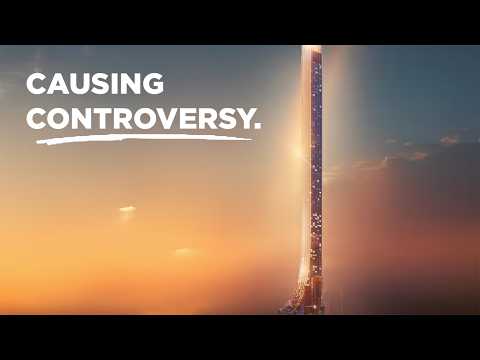
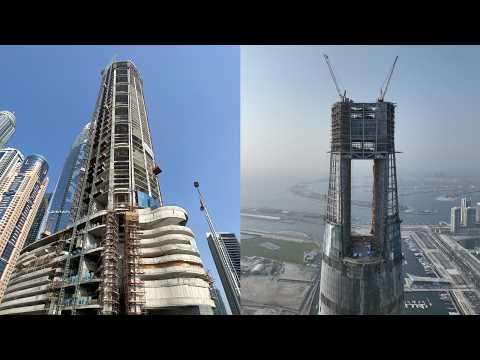
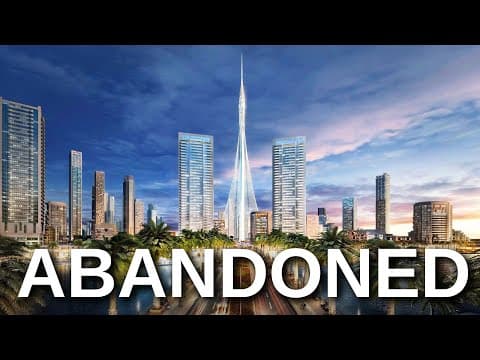
Despite the Burj Khalifa's record standing for over a decade, several projects have been proposed to surpass its height. The Jeddah Tower in Saudi Arabia aims to exceed 1,000 meters but has faced construction delays due to political and economic issues. Similarly, the Dubai Creek Tower, designed as an observation tower, has also stalled, with its height yet to be confirmed.
Other ambitious projects include the Mubarak Al-Kabir Tower in Kuwait, proposed to be 1,001 meters tall, and the Sky Mile Tower in Tokyo, envisioned to reach 1.7 kilometers. However, these projects remain theoretical, with no construction underway.
Structural engineer Bill Baker suggests that with advancements in materials and design, buildings could theoretically reach heights of over 3 kilometers. However, practical challenges such as material limits, human factors, and economic viability pose significant barriers. As buildings rise, the weight on lower floors increases, and the effects of altitude on human physiology become more pronounced.
Moreover, socio-economic factors play a crucial role in determining where such skyscrapers can be built. Many cities lack the economic conditions necessary to support the construction of the tallest buildings, leading to regulations limiting building heights.
For the foreseeable future, the Burj Khalifa will likely remain the tallest building in the world. While innovative designs and materials may pave the way for taller structures, the combination of engineering challenges, economic considerations, and human factors will continue to shape the skyline of our cities. The Burj Khalifa stands not only as a testament to human ingenuity but also as a benchmark for future architectural endeavors.