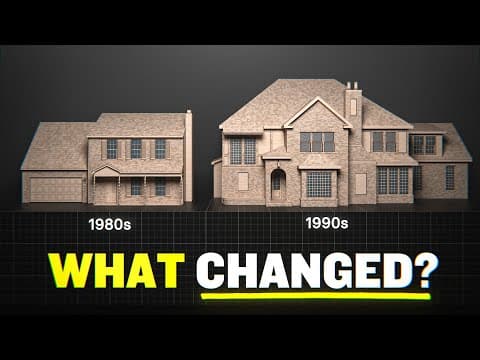
The gang nail plate, a simple metal connector, revolutionized home construction, enabling the rise of open floor plans and McMansions while also contributing to suburban sprawl and economic challenges.
In the realm of construction, certain inventions have far-reaching impacts that extend beyond their initial purpose. One such invention is the gang nail plate, a seemingly simple piece of metal that has played a pivotal role in shaping modern suburban architecture, particularly the infamous McMansions. This blog post explores the history, significance, and unintended consequences of the gang nail plate in the context of suburban development.
The gang nail plate, or truss plate, is designed to connect pieces of wood at their joints securely. Its unique ability to affix wood members at almost any angle has transformed how homes are constructed, allowing for features like open floor plans, cathedral ceilings, and complex roof shapes. These characteristics are now synonymous with modern suburban homes, especially McMansions.
To understand the gang nail plate's impact, we must look back to Miami in the mid-20th century. At that time, many homes were built in a ranch style, but they faced significant challenges during hurricanes, which often tore roofs off due to high winds. Civil engineer John Kelvin Durate recognized the need for improved building practices and worked on establishing the first building code for the area, focusing on roof failures during storms.
Traditional roofs were constructed using individual sloping rafters that required complex connections. These connections often relied on toenailing, a method where nails are driven at sharp angles, leading to weak joints and wasted materials. Durate's observations of these construction flaws prompted him to innovate.
Durate sketched the first prototype of the gang nail plate, made from galvanized steel with tiny spikes that could grip wood securely. This innovation allowed for stronger inline connections, replacing the need for overlapping boards and toenailing. The gang nail plate enabled the use of trusses instead of individual rafters, which significantly changed residential construction.
The introduction of trusses, made possible by the gang nail plate, offered numerous benefits:
By the 1970s, pre-manufactured trusses became standard in suburban construction, leading to significant changes in home design. The adoption of trusses allowed for:
As the 1980s approached, home builders began prioritizing size and complexity over quality. The gang nail plate's efficiency allowed for the construction of larger homes, often referred to as McMansions. These homes featured exaggerated architectural elements, such as sprawling open floor plans and intricate roof designs, becoming symbols of excess.
While the gang nail plate was intended to create stronger, more efficient homes, it inadvertently contributed to less sustainable living patterns. The savings from using trusses were often reinvested into larger homes, leading to increased energy consumption and material use. This shift also altered societal values, moving from handcrafted uniqueness to mass-produced uniformity.
The rapid construction enabled by the gang nail plate had broader implications:
The gang nail plate is a prime example of how a single invention can reshape an entire industry and influence societal norms. While it has enabled the construction of modern homes, it has also led to suburban sprawl and economic challenges. As we reflect on the impact of such innovations, it is crucial to consider not only what we can build but also what we should build for a sustainable future.