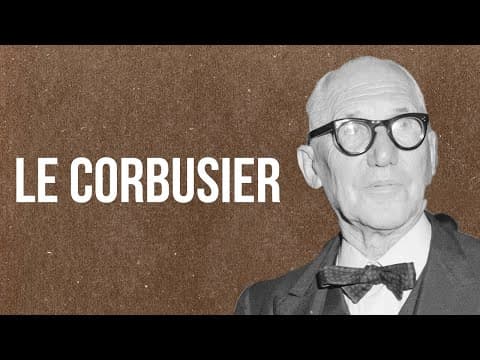
Le Corbusier, a pioneering Swiss architect, revolutionized modern architecture in the early 20th century with his emphasis on functionality and efficiency. His critiques of Victorian architecture and urban design led to innovative ideas that shaped modern living spaces, though his urban planning concepts often resulted in controversial outcomes. This blog explores his philosophies, notable works, and the paradox of his legacy in architecture and city planning.
Le Corbusier, an extraordinary Swiss architect, played a pivotal role in shaping modern architecture and urban design in the first half of the 20th century. His innovative ideas and critiques of traditional architectural styles have left a lasting legacy that continues to influence contemporary design.
Le Corbusier began his career by vehemently opposing the ornate architecture of the Victorian era. In his seminal book, Towards a New Architecture, published in 1923, he contrasted the beauty and intelligence of modern engineering with the disillusionment of contemporary architects. He famously stated, "Our engineers are healthy and virile, active and useful, balanced and happy in their work," while lamenting the state of architects who he believed were becoming obsolete.
He argued that the future of architecture lay in simplicity and functionality. Le Corbusier envisioned houses that were ascetic, clean, and disciplined, devoid of unnecessary decoration. His disdain for ornamentation extended even to the British royal family, whom he criticized for their lavish carriage, suggesting they should adopt a more modern mode of transport.
Le Corbusier's philosophy centered around the idea that architecture should serve a clear purpose. He proposed a straightforward list of requirements for a house:
He believed that modern man desired a well-lit and heated space, akin to a monk's cell, where one could also gaze at the stars. This focus on functionality was a radical departure from the decorative styles of the past.
In the 1920s and 30s, Le Corbusier designed private houses in and around Paris that were unlike anything seen before. He meticulously considered every detail, often designing furniture himself, which sometimes earned him more income than his architectural projects. His designs emphasized efficiency and modernity, reflecting his belief that architecture should be a reflection of contemporary life.
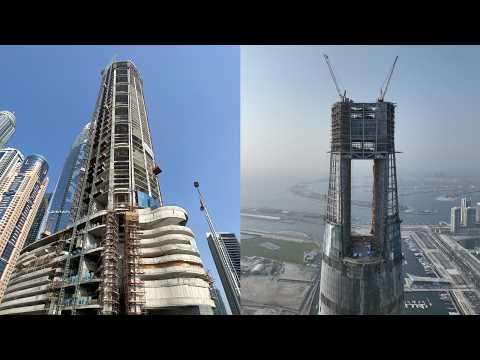
Le Corbusier's vision extended beyond individual buildings to encompass entire cities. His influential works, The City of Tomorrow and Its Planning (1925) and The Radiant City (1933), called for a radical transformation of urban environments. He advocated for the demolition of existing city centers to make way for new, taller buildings that could house thousands of residents. His first visit to New York left him disappointed by the city's relatively low skyscrapers, prompting him to declare that they were too low.
In his ideal city, streets would be replaced with dedicated footpaths and expansive motorways, allowing for a more organized and efficient urban experience. However, his ideas often clashed with the realities of human nature and urban life.
Ironically, while Le Corbusier aimed to create utopian living spaces, his urban planning concepts contributed to the development of dystopian housing estates that now surround historic cities like Paris. These areas, characterized by their stark concrete structures, often evoke confusion and horror among tourists. Le Corbusier's vision overlooked the complexities of community living, such as noise, crime, and the drabness of concrete under grey skies.
His ideas, while revolutionary, sometimes failed to account for the human experience within these environments. The challenges of living in high-rise buildings, such as fire hazards and social isolation, highlighted the limitations of his architectural philosophy.
Le Corbusier passed away in 1965, leaving behind a mixed legacy. He was responsible for some of the most beautiful private houses ever built, yet his urban designs often led to the degradation of city life. His ambition to change the world through architecture was both admirable and flawed.
Today, we can appreciate Le Corbusier for his contributions to modern architecture while also recognizing the complexities and challenges that arose from his ideas. His beautiful designs, from white-washed villas to thoughtfully crafted furniture, continue to inspire architects and designers around the globe, reminding us of the delicate balance between form, function, and the human experience in our built environments.