In the aftermath of World War II, various architects proposed ambitious plans to transform Tokyo into a floating metropolis, addressing the city's housing crisis and urban expansion. Kenzo Tange's plan, along with ideas from the Metabolist movement, envisioned a city built on water, featuring interconnected zones and innovative structures. Despite their grand designs, none of these plans were realized, yet Tokyo continues to expand into the bay, reclaiming land and evolving over time.
Tokyo, the capital of Japan, has long been a city of innovation and ambition. In the wake of World War II, as the city faced devastation and a burgeoning population, architects and planners began to dream of a radical transformation: a massive floating metropolis. Among these visionaries was Kenzo Tange, whose plans for Tokyo would change the way we think about urban development.
In the years following the war, Tokyo was in disarray. The city was overwhelmed with job seekers and returning soldiers, leading to a housing crisis. The elites of Tokyo were restless, seeking solutions to the pressing problem of too many people and too few homes. One proposed solution was to build satellite cities, but this approach faced skepticism due to the unpredictability of human behavior.
Enter Hi Sakura Kano, chairman of the Japanese Housing Corporation. Instead of expanding Tokyo outward, he suggested creating land in the bay itself. His audacious idea involved using atomic bombs to blow up a mountain, thereby generating enough land to fill two-thirds of Tokyo Bay. This would create a 1,500 square kilometer area for development, a plan that was both visionary and controversial.
Kano's initial concept laid the groundwork for what would become known as the Neo-Tokyo Plan, spearheaded by Matsunaga, head of the Council for Industrial Planning. This plan shifted from massive landfills to a series of islands, each designated for specific purposes: commercial, industrial, residential, and recreational. It also proposed two international airports instead of one, enhancing connectivity.
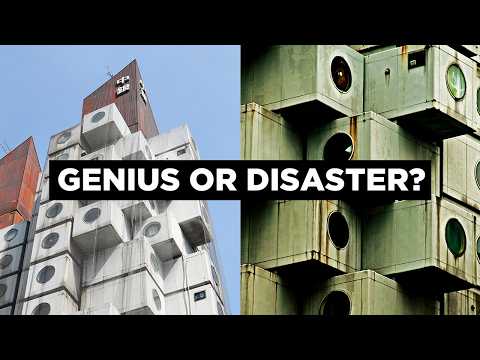
In the 1960s, a group of Japanese architects introduced a new philosophy known as Metabolism. They envisioned cities as living organisms, constantly evolving and adapting. This perspective led to innovative designs that challenged traditional urban planning.
One of the prominent figures in this movement was Otaka, who proposed building high-rise apartments on pillars above the water, minimizing the need for extensive land reclamation. His plan included industrial areas facing the bay and residential zones on the outer belt, connected by highways and railways.
Kurokawa, a young architect, presented two radical plans. The first envisioned a city as a giant organism with interconnected buildings serving as communities. His second plan, The Ocean City, proposed a network of helix-shaped land units connected by highways, allowing for organic growth and retraction.
Kikutake's ideas were among the most ambitious, featuring tightly packed floating hexagons and drifting cylinder cities. His designs aimed to create a grid system across the bay, with floating housing and factories linked by extensive roadways.
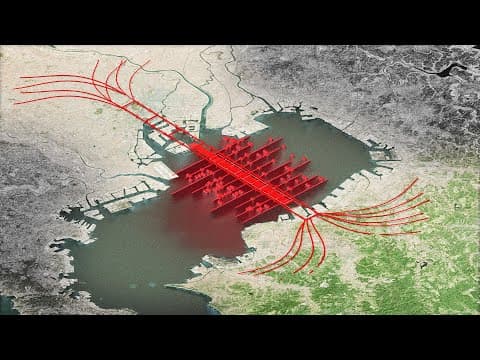
Kenzo Tange, a central figure in the Metabolist movement, synthesized these ideas into a comprehensive plan for Tokyo Bay. His vision included a linear city built on a massive spine, capable of housing 10 million people. This spine would connect Tokyo City with Chiba, featuring multi-level highways and megastructures designed to grow over time.
Despite the innovative nature of these plans, none were realized. The scale and complexity of the proposals proved too daunting, and the risks involved were significant. However, Tokyo has continued to expand into the bay, reclaiming land and evolving organically over the decades.
While the grand visions of a floating metropolis have not come to fruition, the legacy of these plans remains. Today, more than 15 percent of Tokyo Bay has been reclaimed, and the dreams of building on the bay persist. The story of Tokyo's transformation is one of ambition, creativity, and the relentless pursuit of solutions to urban challenges, reflecting the city's dynamic spirit and resilience.