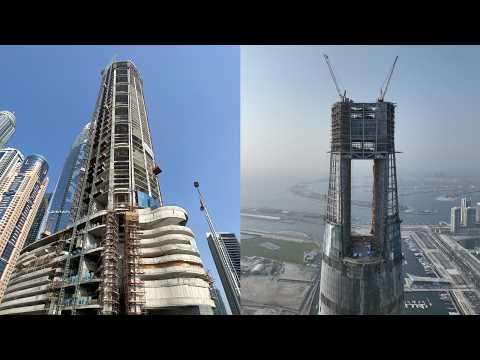
Modern architecture emerged in the early 20th century as a radical departure from traditional styles, influenced by artistic movements and new technologies. It aimed to address societal issues through innovative design, emphasizing functionality and simplicity. Key figures like Walter Gropius and Le Corbusier shaped the movement, which evolved into the International Style. Despite facing challenges and criticisms, modern architecture continues to inspire contemporary architects, embodying a timeless ideal of progress and optimism.
Modern architecture is a movement that has profoundly influenced the built environment of the 20th century and beyond. It represents a radical departure from centuries of architectural thought, promising that through rational design and innovative materials, architecture could contribute to building a better world. This blog post explores the origins, characteristics, and enduring legacy of modern architecture.
Modern architecture did not emerge as a singular style but rather as a broad term that encapsulated various new building designs at the turn of the 20th century. It was heavily influenced by contemporary artistic movements in Europe, including expressionism, futurism, and cubism. These movements were inspired by advancements in technology and materials, reflecting the changing societal landscape.
The term "modern architecture" was first coined by architect Otto Wagner in 1896 during a speech at Vienna's Academy of Fine Arts. Wagner argued that new human tasks and perspectives necessitated a reconstitution of existing architectural forms. He emphasized that architects could no longer replicate old styles; instead, they needed to create designs that resonated with the present moment. This idea aligns with the German philosophical concept of zeitgeist, or the spirit of the time.
As modernism took root, architects around the world began to reinterpret existing forms in innovative ways. Notable figures included Antoni Gaudí and Louis Sullivan, who, despite their differing styles, both contributed to the modernist ethos.
A pivotal moment in modern architecture came with the establishment of the Bauhaus school in Germany by Walter Gropius in 1919. The Bauhaus aimed to eliminate ornamentation and promote rational design, becoming the most influential institution in the modernist movement. It was here that architects like Mies van der Rohe developed their ideas, exemplified by the Barcelona Pavilion in 1929, which showcased the principles of open space and minimalism.
Another towering figure in modern architecture was Le Corbusier, who drew inspiration from cubism and viewed architecture as an object in space. He famously described a house as "a machine for living in," advocating for designs that addressed societal needs. His works, such as Villa La Roche and Villa Savoye, embodied his ideals and showcased his belief in architecture's potential to create a better society.
Modernist architects believed that architecture could solve pressing societal issues. They envisioned that improved design could eradicate diseases through better ventilation and natural light, and that homelessness could be addressed through innovative housing solutions. For them, architecture was not merely about providing shelter; it was about creating a blueprint for a brighter future.
As modernism gained traction, the Museum of Modern Art in New York organized the 1932 exhibition "Modern Architecture: International Exhibition," curated by Philip Johnson and Henry Russell Hitchcock. This exhibition showcased prominent architects and introduced the term "International Style," which described a new architectural language characterized by simplicity, lack of ornamentation, and the use of materials like steel, concrete, and glass.
In the post-war years, modernism continued to thrive, particularly in the United States, where many modernist architects immigrated. They attracted the attention of business leaders eager to showcase their companies' modernity and prestige. Iconic buildings like the Lever House and the Seagram Building in New York broke away from traditional designs, marking a new era in skyscraper architecture.
Modernism also adapted to regional contexts, with variations emerging in places like Miami and California. Architects like Philip Johnson and Mies van der Rohe created notable works that reflected local climates and cultures, while Oscar Niemeyer designed sculptural buildings in Brasília, Brazil.
Despite its initial success, the idealism of modernism began to wane by the late 1960s. The movement, once focused on creating utopian spaces, increasingly catered to corporate identities. The death of key modernist figures left a generation of architects who often resorted to imitating their predecessors, leading to homogenized urban landscapes.
Critics pointed to the failures of modernist urban planning, particularly Le Corbusier's "towers in a park" concept, which resulted in poorly designed public housing projects like Pruitt-Igoe in St. Louis. Architectural historian Charles Jencks famously declared that modern architecture died on the day of Pruitt-Igoe's demolition in 1972.
However, the question remains: did modern architecture truly die? While other styles have come and gone, modern architecture has persisted. Each generation of architects continues to build upon the foundations laid by the original modernists, emphasizing the principles of form following function and the integration of new materials.
Modern architecture resonates with a timeless ideal, offering a hopeful vision that encourages humanity to strive for progress. It embodies the belief that we should not be content with the status quo but instead rise to meet the challenges of our time, making today a prologue to a promising tomorrow.
In conclusion, modern architecture is more than just a style; it is a movement rooted in the desire to improve society through innovative design. Its legacy continues to inspire architects and shape our built environment, reminding us of the power of architecture to influence our lives and communities.